


New Injectable PrEP Doesn’t Interfere With Hormone Therapy For Trans People
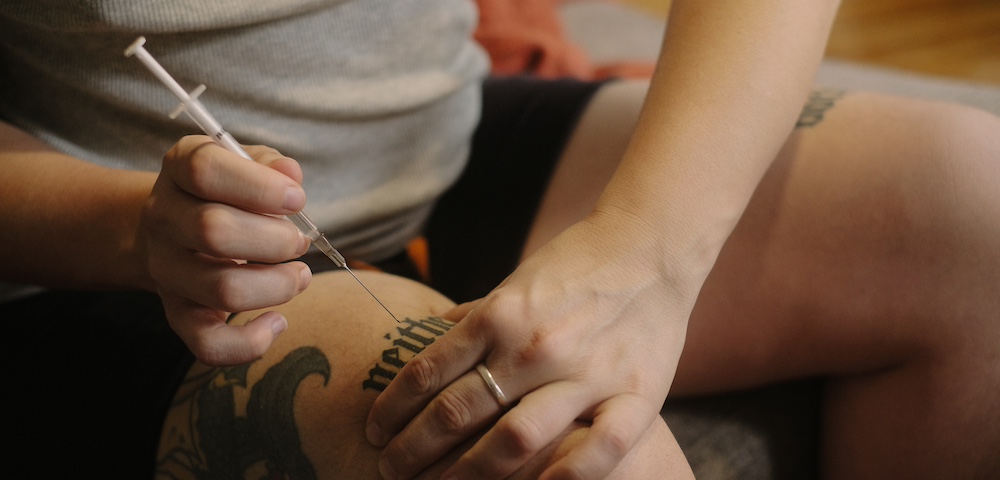
Image: Gender Spectrum/Vice
New research has shown that the the longest-acting form of injectable PrEP, known as lenacapavir, shows no adverse interactions with hormone therapy for trans patients.
Lenacapavir, which is marketed under the brand name Yeztugo by Gilead Sciences, was only recently approved by the FDA in June, and marked a groundbreaking advance in long-lasting protection against HIV.
Currently, the only injectable PrEP on the Australian market is GlaxoSmithKline’s cabotegravir, known as Apretude, which was approved for use in Australia in 2022, and provides two months of protection. There’s also a pill form marketed as Truvada, which is taken daily.
“In the most gender-diverse Phase III PrEP trial conducted to date, lenacapavir had no clinically significant impact on feminizing or masculinizing gender-affirming therapy concentrations,” researchers said.
Led by Jill Blumenthal, MD, of the University of California San Diego, the study looked at interactions between lenacapavir and hormone treatments including testosterone and estradiol, which are metabolised by enzymes the injectable can inhibit, potentially affecting hormone levels.
Analysing blood samples of patients using hormone treatments over 52 weeks, researchers found that concentrations of the estradiol were generally comparable before and after lenacapavir administration, as were testosterone and dihydrotestosterone levels in the people using masculinising hormones.
“Taken together with our prior findings that gender-affirming hormone therapy had no significant effect on lenacapavir pharmacokinetics, these data support the concurrent use of twice-yearly lenacapavir PrEP and feminizing or masculinising gender-affirming hormone therapy without dose adjustment in gender diverse individuals, addressing a key barrier to PrEP uptake and adherence in a population that is disproportionately vulnerable to HIV acquisition,” researchers concluded.
What does this mean for Australians?
Trans people living outside of Australia have a higher risk of HIV than their cisgender peers, with transfeminine people have up to 66 times higher odds of living with HIV, while transmasculine people have up to 6.8 times higher odds.
Limited research exists for trans people living with HIV in Australia, though epidemiologists estimate the number to be low, given the reasonably successful HIV response nationwide. However, most studies within the last decade indicate that the “true” number of transpeople living with HIV sits somewhere around 1 and 3 per cent.
Regardless, it’s one less barrier trans people will need to face in order to access the healthcare they deserve.
“Yeztugo could be the transformative PrEP option we’ve been waiting for—offering the potential to boost PrEP uptake and persistence and adding a powerful new tool in our mission to end the HIV epidemic,” said Carlos del Rio, MD, Distinguished Professor of Medicine in the Division of Infectious Diseases at Emory University School of Medicine and Co-Director of the Emory Center for AIDS Research in Atlanta.
“A twice-yearly injection could greatly address key barriers like adherence and stigma, which individuals on more frequent PrEP dosing regimens, especially daily oral PrEP, can face. We also know that, in research, many people who need or want PrEP preferred less frequent dosing.”
The drug isn’t yet available in Australia, though 2023’s National HIV Taskforce Report did recommend the fast-tracking of a long-acting injectable PrEP to the federal government.
It may, however, present a financial challenge, with Yeztugo retailing at a whopping US$28,218, or $43,300, a year.
Research from UNSW’s Kirby Institute published in September show that although there’s been an increase in HIV diagnoses over the past two years, the overall trajectory remains positive, with a decline of 27 per cent in the past decade.
Researchers and advocates hope to virtually eliminate domestic HIV transmissions by 2030, with 757 new diagnoses made throughout 2024.
“There is a face and a name behind every one of those ‘data’ – each with lived experience of the reasons why health systems have failed to prevent HIV transmission,” Scott Harlum, President of the National Association of People with HIV Australia said.
“This reinforces the critical importance of people with HIV sharing our lived experience so that we can build a better understanding of HIV and effectively plan a response which enables year-on-year declines in new cases until we reach the virtual elimination goal.”






Support the Star Observer… while you still can
LGBTQIA+ media is under threat. Queer content is censored by tech conglomerates who amplify bigotry and push out AI slop — so we receive less financial support than ever.
When our community is muzzled and intolerance intensifies, we need queer media more than ever. Your donation means we can continue paying queer journalists to write queer news.
Don’t rely on the straight lies of big tech – support Star Observer instead and donate now.