


‘Go gay, go sad, go dark’ Josh Silver Talks Fruit Fly And The Unexpected Reality Of His Success
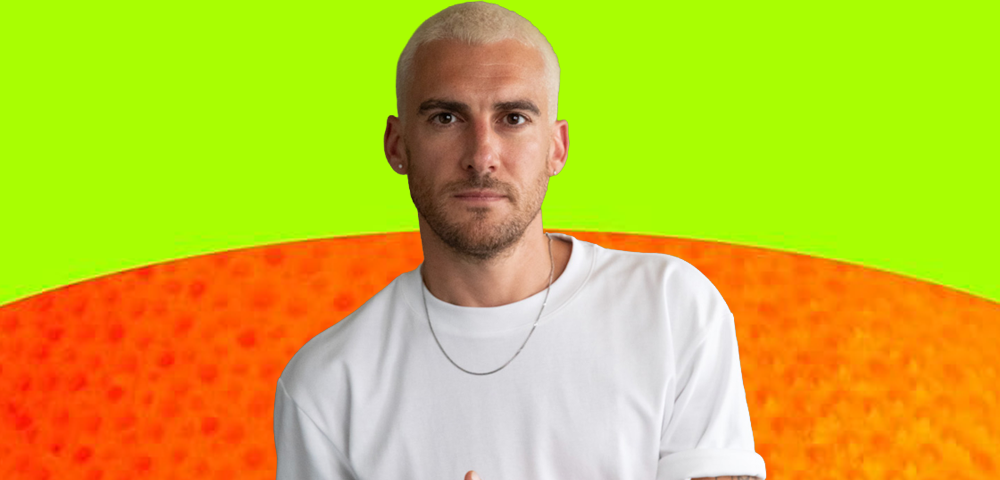
Image: Image: Josh Silver/Bloomsbury
“Go gay, go sad, go dark,” Fruit Fly, by UK author Josh Silver, has quickly become the latest international queer bestseller and easily one of the best books of the year.
With Fruit Fly attracting international attention and an A24 adaptation in development, Josh Silver talks about the experiences behind the book, the appetite for queer stories and leaving nursing behind.
Until recently, Josh Silver was trying to fit writing around shifts as a mental health nurse. Now his novel Fruit Fly has caught the attention of Anne Hathaway, found an international readership and secured a television adaptation with A24.
When we sit down to talk, he is still getting used to how quickly his life has changed.
“Yeah, it’s been wild. It’s been strange. I don’t know. It’s, it’s quite an adjustment. I was nursing until not that long ago. I’m not saying that I don’t enjoy it or whatever. It’s, it’s great. It’s just a very big change in my life and traveling a lot, which is wonderful. I’m excited to see all these places. I’m just getting used to it.”
His adult debut follows Mallory, a writer desperate to repeat her earlier success, whose ambitions lead her into the life of Leo, a young gay man struggling with addiction. In Leo, she sees the material for a story that could revive her career and become a bestseller.
It’s a premise that gives Silver room to explore both the experiences of a young gay man struggling with addiction and the interests of the people who want to tell his story. For an author now finding success with that very book, the irony is hard to miss.
“Yeah, it’s pretty ironic. I mean, it is strange. I didn’t set out for any of it. I didn’t manifest any of it. I was just writing a story that I thought would be fun.”
How Fruit Fly reached Anne Hathaway
One of the book’s most widely shared moments came when Jack Edwards, the book content creator behind Inklings, handed Anne Hathaway a copy during an interview. “I gave this book to Ann Hathaway and she freaked out. You have never seen anyone fall in love with the premise of a book so quickly” he said,
Her enthusiasm for the premise helped introduce Fruit Fly to a much wider audience, sending it viral. The clip arrived in the same week as news of the A24 adaptation. By September, Fruit Fly was topping bestseller lists in the UK and the United States.
View this post on Instagram
For anyone watching from the outside, it might have looked like the video set everything in motion. Silver explains that the screen adaptation had a longer history with conversations starting earlier this year.
In our conversation, he recalls the circumstances around the initial offer, when he was still trying to manage two demanding jobs.
“It was earlier in the year and yeah, I remember I was like in my car on the way back from work after a shift and I was just like, you know, fucking stressed with work. And I was just like, I can’t keep writing books and working at the same time” he confessed.
A call from his agent brought news that A24 wanted to meet. After conversations with several production companies, he signed with A24, and the public announcement happened to coincide with the Hathaway video.
“And I think it just created this kind of thing online where people noticed it and it had a bit of exposure.”
The attention has been welcome, even if seeing his own book take off has occasionally brought him back to the ambitions of his fictional author.
“It was strange, yeah, when the book started doing well, particularly in America and overseas, I was like, oh, this is actually quite strange that it’s in some ways reflecting that what Mallory wanted for her own book. Yeah, that was weird.”
Writing from both sides of the system
The experiences behind Fruit Fly began well before the book deals and festival appearances. Silver’s work in mental health followed his own experience of addiction and recovery, giving him a perspective that would eventually help shape the novel.
“Well, I got sober. I’d stopped acting and I was working on the wards and I really loved it. I was working in a detox clinic. So I’d been on both sides of the system. I’d received help from the mental health services. And then I was working in a detox clinic, watching people detox off various forms of drugs, you know.”
Working with young gay men who were withdrawing from drugs associated with chemsex brought him back to experiences he recognised. It also made him consider when he would be ready to explore that part of his own life through writing.
“And I just was ready to write about it. And I think my own past with that stuff is far enough gone that I can sort of talk about it.”
Leo’s experiences could have formed a novel on their own. But placing him alongside Mallory allowed Silver to examine what happens when someone else’s difficult life becomes an opportunity for a writer. When I ask where that part of the story came from, his answer takes us back to his earlier career in acting.
“I just felt like culturally things had shifted. There are lots of queer stories that are at the forefront of cultural conversations. And I was just intrigued because, well, actually, to be honest, I was pissed off because I’d been an actor and I’d been told not to be gay and that it wouldn’t help me. And then all of a sudden it had this commercial appeal and people were making money out of it.”
The shift left him questioning the terms on which queer stories were being welcomed, particularly when creative industries spoke about supporting authentic voices.
“And actually they were like, no, actually, you can be gay now, but really just a specific kind of gay or, you know, the whole thing around the publishing industry saying they champion the authentic voice. But I just found some of it to be a little disingenuous because I think that what they mean by that is we’ll follow what people buy.”
“And it’s rare that you actually meet publishers who want to champion or invest in financially real authentic stories, not just ones that are going to meet the mass market.”
That frustration helps explain why Mallory is such an important part of the novel. Her interest in Leo is shaped by what she thinks readers want, and by what she hopes his story can do for her own career. Through her, Silver can question the demand for queer stories as well as the way those stories are told.
The woman behind the ambition
Mallory’s treatment of Leo is only part of her story. Her relationship with her husband raises its own questions about control, mental health and whose version of events we accept.
It was a thread that stayed with me after reading the book. The coercive control in the relationship is often subtle, and it complicates how we understand a woman whose actions can otherwise make her difficult to sympathise with.
When I ask whether Silver’s nursing work informed this part of the novel too, he explains how working with people who had experienced abuse changed his understanding.
“But I also have worked with victims of that kind of abuse as a mental health nurse, yeah. I’ve worked with a lot of, well, not just women, men experience being victims of that as well. But I worked in a perinatal team for a long time and working with moms and learning about their strength and their bravery and how different life is moving through this world as a woman was very eye-opening to me and, yeah, it was, it was just something that I wanted to explore.”
Without giving away the ending, it is a part of Fruit Fly that rewards looking again at what we have been told about Mallory, and who has been doing the telling. Silver leaves room for the reader to question her circumstances, even while questioning her choices.
Taking Fruit Fly to the screen
With A24 developing the adaptation and Silver attached as an executive producer, readers have already begun imagining who might bring Mallory and Leo to life.
Silver has heard plenty of suggestions himself, including Hathaway, Carey Mulligan and Rose Byrne. The excitement around casting is understandable, but he is careful to distinguish those conversations from decisions about the production.
“I know what other people’s ideas are. And I’ve heard a lot of people name names of who they might want in the roles. Like people, obviously Anne Hathaway, because she received the book online and people think she’d be good in the part.” However, Josh is firm on not speculating on casting for the production; he likes the possibility of giving a less familiar actor an opportunity but he is conscious of how easily an enthusiastic exchange could be mistaken for an announcement.
“I have to be careful with what I say, just because they’re like in the middle of making these decisions.”
There is no release date offered during our interview, and his own attention is currently on another manuscript.
“I think it’s still relatively early days. So we’ll see. I’m actually focused on writing my next book at the moment.”
The move to Melbourne that almost happened
Before Fruit Fly changed his working life, Silver had been considering a very different reason to come to Australia. His brother already lives in Sydney with his partner, and Silver was looking at moving to Melbourne to continue nursing.
“Before all of this happened, I was going to move out here and move to Melbourne as a nurse. I had to apply for the visa because I was so sick of the conditions of nursing in England.”
Several friends had already made the move, and their experiences gave him a sense of what a different working life might offer.
“A load of my nursing friends have moved over here. I’m going to see them at the event that I’m doing at Gertrude and Alice in Sydney. And I can tell from talking to them that they are much happier.”
Instead, the success of the novel has allowed him to leave nursing and focus on writing. When we speak, he has only been a full time author for around ten weeks, and his old routine still feels close enough to return at any moment.
“I mean, maybe a little bit more now, but it’s just not ending. And I thought, oh, I’ll wake up and, you know, be putting on my scrubs and heading into work and de-icing my car, and it just hasn’t happened yet. So I feel like my nervous system’s settling a bit. I’m riding the wave and, yeah, it’s happening. I’m very grateful.”
His plans now involve New York, a city he has visited often and where he already has friends.
“And I’ve got so many friends there. I love the city and I’ve been a lot. And I just thought, fuck it. I’ll see if I can try and see and make it work. So I’ll be there, hopefully, by the end of the year.”
Australia remains somewhere he feels connected to, through his family and through the readers who responded to Fruit Fly early on.
“And when I come back, everyone is so kind and it’s really lovely and it feels like part of it sort of started here because I was here when the book started doing really well. And I did the Auckland Writers Festival and it did very well there. And then I did the Sydney Writers Festival and people were really excited about it. So it just felt like I’m sort of like part of, there’s a part of me that feels rooted here. It’s really nice.”
Taking part in Queerstories has also given him the chance to meet other queer writers and hear stories from their lives.
“I met them there last night and it was really, really lovely to be a part of it. And it was such a fun and exciting hour of everyone just letting loose and having a right laugh. Everyone was laughing a lot. It was very fun.”
More stories waiting to be told
Leaving nursing has given Silver more time to write, although it has also taken him away from work that provided plenty of material to think about.
“It’s weird, though, because I do like to write about what I see as a nurse.”
When I suggest that he might be leaving a source of inspiration behind, he has a ready response.
“Well, I don’t know. I’ve got quite a lot stored up, if I’m honest.”
Before our interview, I had seen him busy at his laptop, and I ask what readers can expect from the next book. He cannot reveal much about the plot, but he can explain the frustration that prompted it.
“I was a psych nurse for a long time and I write about stuff that makes me angry and I just came across a situation at work that really, really pissed me off and I feel far more fueled to write when I’ve got that, uh, impetus. So it will be revolving around, yeah, stuff to do with the way mental health is perceived nowadays.”
He confirms that queer characters will be part of the story too, while describing a book whose concerns, like those of Fruit Fly, extend beyond sexuality.
For now, he is enjoying hearing from the people who have picked up his current novel. When I tell him how quickly I finished it, he explains that some of the messages that please him most come from readers who had not opened a book in years.
“It’s really nice. I hear people, you know, message me and say, I haven’t read a book in five years and I read this in the weekend and I’m really, really always so pleased when I hear stuff like that, that people feel that they can read. And I think in the world, it’s quite fast-paced. And I think in the world of short attention spans, it’s probably suited to that kind of brain.”
The celebrity attention and the prospect of a television series have brought new opportunities. Hearing that people are finding their way back to reading gives him another reason to enjoy what Fruit Fly has started.
And for Australian readers hoping to see him again, he expects there will be more visits.
“I’m sure we’ll be out here for my next book, definitely. There are a lot of people who like Fruit Fly here. It’s amazing.”
Fruit Fly by Josh Silver is available now.
View this post on Instagram



Support the Star Observer… while you still can
LGBTQIA+ media is under threat. Queer content is censored by tech conglomerates who amplify bigotry and push out AI slop — so we receive less financial support than ever.
When our community is muzzled and intolerance intensifies, we need queer media more than ever. Your donation means we can continue paying queer journalists to write queer news.
Don’t rely on the straight lies of big tech – support Star Observer instead and donate now.


Leave a Reply