


Australian Christian Lobby Call On NSW Gov To Reject All-Gender Toilets
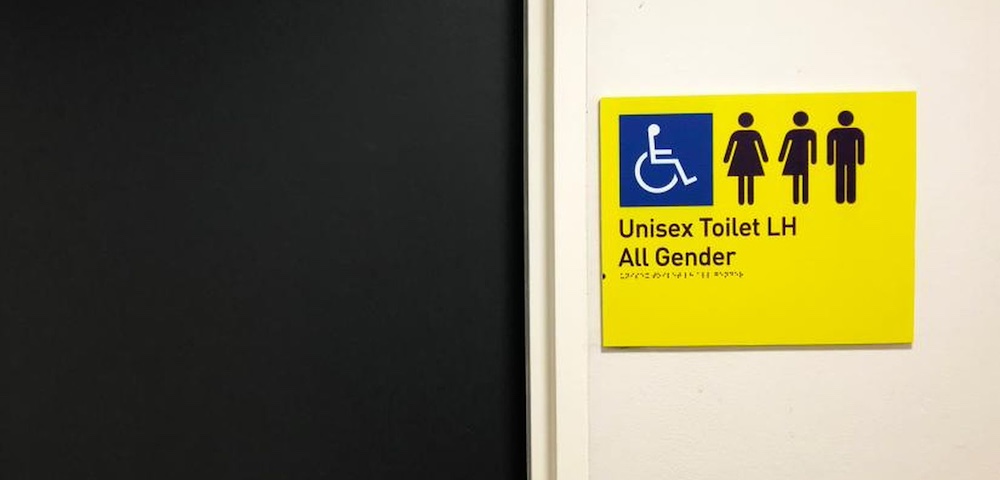
Image: UTS
The Australian Christian Lobby (ACL) is calling on the New South Wales government to reject regulations allowing for the creation of more public all-gender toilets.
New requirements outlined in the National Construction Code 2025, which sets the minimum standards for safety, health, amenity, accessibility and sustainability in public buildings, would see developers able to replace up to half of the minimum required male and female toilets in a building with all‑gender toilets.
Michelle Pearse, Australian Christian Lobby CEO, says reducing the number of single‑sex toilets creates a “genuine safety issue”.
“Women and girls deserve safe, private spaces in public buildings,” she said. “Removing or reducing women’s toilets puts their safety and dignity at risk.”
Common sense has left the building. This is what happens when privacy is sacrificed for ideology.
The Australian Building Codes Board has released the National Construction Code 2025, allowing all-gender toilets to replace single sex facilities in public buildings like schools,… pic.twitter.com/Kb9oK9vtV8
— Australian Christian Lobby (@ACLobby) March 4, 2026
The changes are not mandatory, meaning it would be up to the discretion of developers whether or not to build them, with gendered stalls still available for those preferring to use them.
The Diversity Council of Australia agree that people of all genders, faiths, and those with disabilities or health conditions have different needs when it comes to sanitary facilities or toilets.
“Women and girls, including trans women and trans girls, may feel safer sharing spaces with people of the same gender, especially for workers who have experienced sexual or gender-based violence,” the nonprofit said.
“Factors such as cleanliness, clear sight-lines, location and general security all impact on perceptions of safety.”
Multi-stall all-gender bathrooms are already in use across multiple public buildings across the state, including in Sydney venues such as the Red Rattler Theatre, the Imperial Hotel, the Museum of Contemporary Art, and the International Convention Centre.
NSW rejects changes to exisiting public toilet frameworks
Last month, the NSW government rejected 20 of the 22 recommendations from a Parliamentary Inquiry into Public Toilets, the most comprehensive examination of public toilet provision in the state.
It heard from 60 witnesses across five public hearings, and produced six findings and 22 recommendations aimed at modernising a regulatory framework the committee found to be “not fit for purpose.”
All-gendered toilets were among the rejected recommendations.
“The government cannot say it opposes forced all‑gender toilets in one policy and then allow it to happen through the building code,” Pearse said.
“If the NSW Government truly cares about the safety of women and children in NSW, it should reject these changes.”
The committee’s findings highlighted that inadequate access to public toilets disproportionately affects people with disability, people who experience incontinence, people who menstruate, LGBTQIA+ communities, people experiencing homelessness, First Nations people, and those living in rural and remote areas.
Speaking to the committee as part of the inquiry last year, Elster, a volunteer with the Trans Justice Project, shared her distressing experiences of attempting to use public toilets as a trans person.
“Growing up as a trans kid in regional Australia, I was denied access to basic human decency in the form of not being allowed to use bathrooms,” she said. “If I were to use a men’s bathroom, I risked violence, harassment, threats and being followed and jeered at, amongst other things. Whilst women’s bathrooms were slightly kinder to me, I still faced much the same experience.”
These stories echo findings from previous reports examining the experiences of trans and gender diverse people in Australia, with the Australian Human Rights Commission’s 2016 report into university sexual violence finding they were more likely to have been sexually harassed in a university setting than women and men.
The Government has until May 1 to accept or reject the changes to the National Construction Code.



Support the Star Observer… while you still can
LGBTQIA+ media is under threat. Queer content is censored by tech conglomerates who amplify bigotry and push out AI slop — so we receive less financial support than ever.
When our community is muzzled and intolerance intensifies, we need queer media more than ever. Your donation means we can continue paying queer journalists to write queer news.
Don’t rely on the straight lies of big tech – support Star Observer instead and donate now.





This makes no sense. There are NO laws in Australia, or NSW, that mandate the existence of single sex toilets, at all. A man or woman can freely enter the other toilet without consequence, legally. So the existence of all gender toilets is both redundant and moot, the ACL are fools that don’t know the law.