


EXPLAINER: Masks, Money & Massive Pile-Ons – The Global Drama Over US Lesbian Venue, Last Ditch Bar
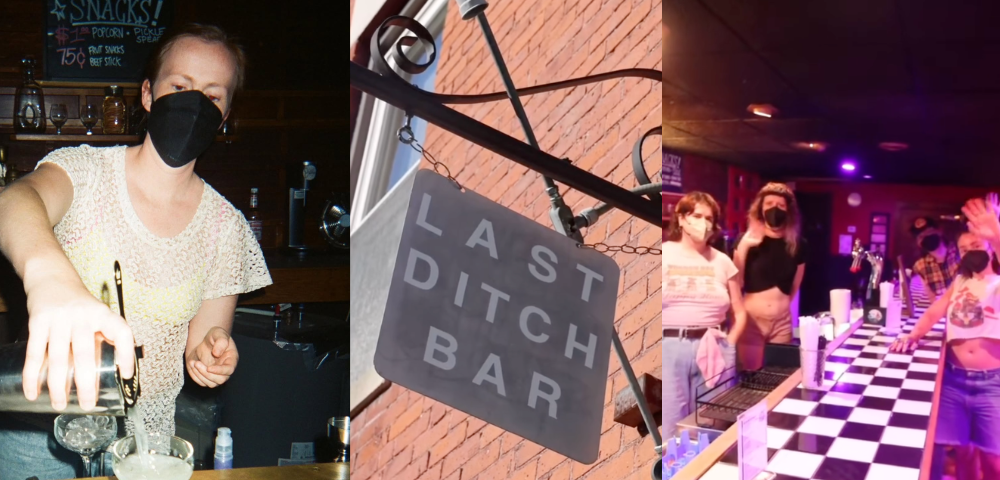
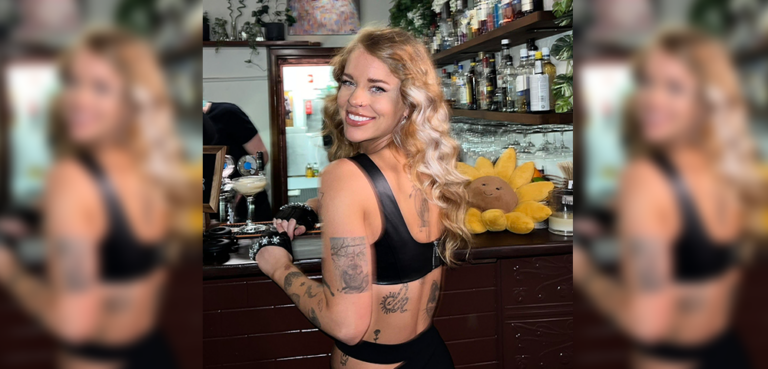
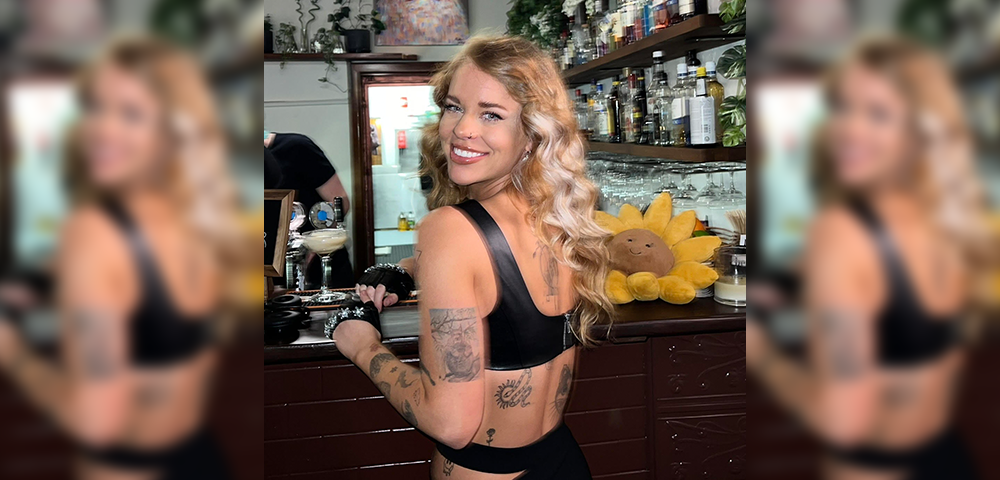
Image: All photos: lastditchbar / Instagram
A struggling Massachusetts lesbian bar, that marketed itself as accessible for disabled and chronically ill people, wanted more people through its doors. So, it decided to made masks optional on Saturday nights. Simple, right? WRONG. Last Ditch Bar has now ended up with an online firestorm that’s gone from one bonkers update to the next.
You may have seen the memes. With my queer gal algorithm, my entire fuckin’ feed is filled with them. But underneath the jokes is a disagreement about disabled people’s access to queer nightlife, an owner under enormous financial pressure, and a local community suddenly having its arguments watched by strangers across the world.
Here’s how it unfolded.
Last Ditch Bar and Arts Venue opened in Greenfield in 2025, requiring patrons to wear a well-fitting KN95 respirator or better to accommodate immunocompromised and COVID-conscious people.
The timing of the bar opening, in a world still struggling with spiking COVID rates, meant that policy was part of what people came for. For patrons concerned about infection, knowing others would also be masked made this a different proposition from an ordinary night out. For disabled people, it was a level of safety they’d probably never experienced before.
But the business struggled. Two co-founders stepped away, leaving Jackie Matellian handling its daily operations – various reports of the company’s financial situation have surfaced since 2025.
The bar announces mask-optional Saturdays
Among updates about events and volunteers, Last Ditch posted: “It is with love we inform our immunocompromised disabled divas we will be opening Saturday nights as mask optional.”
The idea was to attract more customers through themed club nights. Thhe bar said the decision was following feedback from regulars, volunteers and its team. Masked bookings would remain a priority, alongside a recurring monthly masked social.
Some people welcomed the change. Others were hurt and angry, both about losing a masked Saturday night and about the way it was announced.
And the somewhat flippant wording landed badly. Being affectionately called a diva doesn’t do much to soften news that might mean you can no longer comfortably attend.
The objections concerned whether immunocompromised patrons could keep participating in a space that had specifically gone out of its way to market itself as welcoming to them. Supporters of the change, meanwhile, questioned how that space could survive if enough people weren’t turning up.
The apology creates another problem
Two days later, Last Ditch apologised for the way it had communicated the change.
Then came another criticism: the apology was posted as an Instagram image without alternative text, the written description that helps people using screen readers access visual content.
For people already questioning the bar’s commitment to accessibility, that omission added to their frustration.
A meeting becomes a painful confrontation
Last Ditch convened a community meeting, with participants joining in person and over Zoom.
The meeting reportedly went into detail about Matellian’s financial situation, including responsibility for a US$50,000 business loan and living in her truck while trying to keep the venue afloat.
“I never really wanted to do this,” Matellian said. “I don’t think I’m doing a very good job.”
Some critics argued that her distress was taking attention away from the harm they wanted addressed. Soe Noire, a Black artist and performer connected to Last Ditch, challenged the mediation and its handling of race.
The discussion lasted about three-and-a-half hours, and without a doubt didn’t rresolve any of the disagreements.
A local dispute goes international
Annalisa Quinn’s Boston Globe feature appeared on 22 September, and the bar’s troubles became a much bigger spectacle.
The feature caused a firestorm online, with queer users debating the bar’s decision, and right-wing people sharing the feature as irrefutable evidence of LGBTQIA+ leftys being dramatic.
Reddit users argued over both. In r/lgbt, u/ariabelacqua asked: “Is this particular issue actually an issue in many/most queer spaces?”
Another commenter, u/HyacinthFT, wrote: “just because some right wingers are sharing a piece doesn’t mean that it was a rightwing hit piece.”
Neither comment speaks for the whole community of course, but I belive it does capture the divide: some readers recognised behaviour they wanted challenged within queer spaces, while others questioned why this particular dispute was becoming fodder for people who already despise us.
Regardless, the Boston Globe said the feature about Last Ditch Bar has become ‘one of the most-read stories we’ve published’.
Last Ditch tells people to stop harassing its critic
As the story spread, Last Ditch publicly defended Noire.
The bar said Noire was receiving threats, slurs and harassment. It also rejected claims circulating about his conduct: “He did not call for a shutdown, nor did he call for the bar to be firebombed.”
Them separately pointed out that the firebombing comment quoted in the original feature was not attributed to Noire.
Whatever readers thought of the meeting, Last Ditch was clear that attacking a Black patron was not helping the venue. Having an opinion about a bar’s mask policy does not give anyone a free pass to be racist.
Google searches shoot up
Out of pure curiosity, I wanted to see whether this story was just plastered everywhere on my socials because of my stereotypical ‘queer woman’ algorithm, or whether this actually was a massive story. When I checked Google Trends, I was surprised to see just how far the interest travelled.
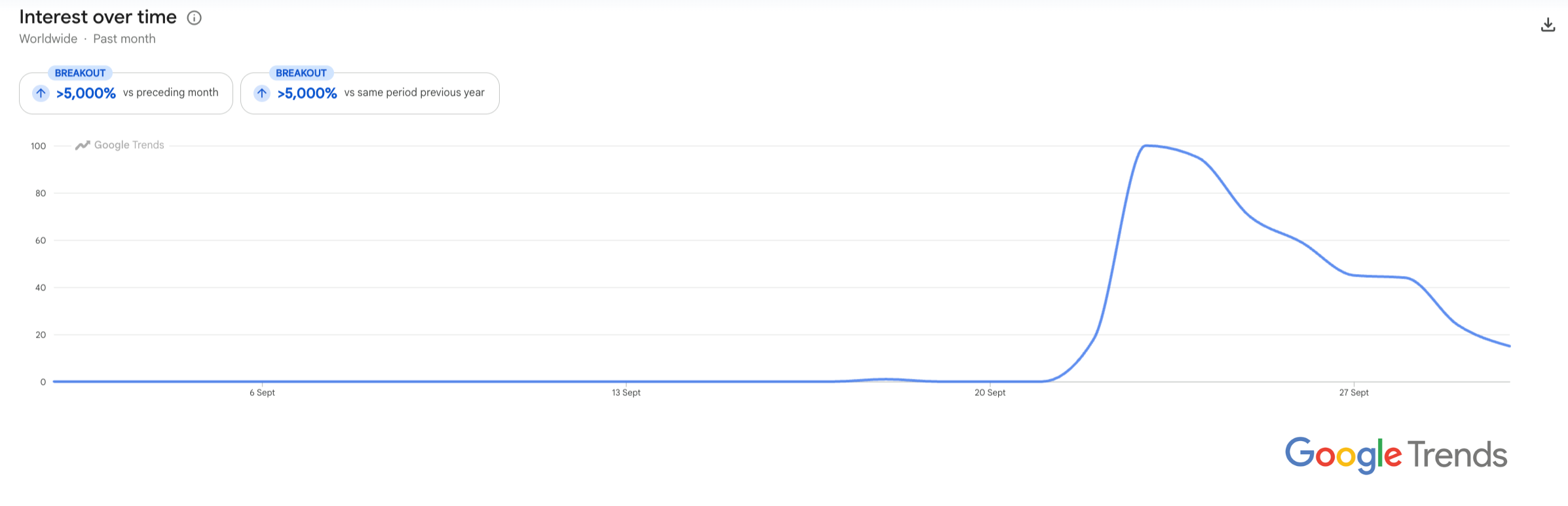
Across the worldwide, past-month chart, the line sits at or near zero for most of September before rising sharply after 22 September, reaching its peak around 23 September. It then falls, but remains visibly above its earlier baseline at the end of the period.
Google flags growth of more than 5,000% against both the preceding month and the same period a year earlier. Those are monthly comparisons, rather than a measured 5,000% increase over seven days.
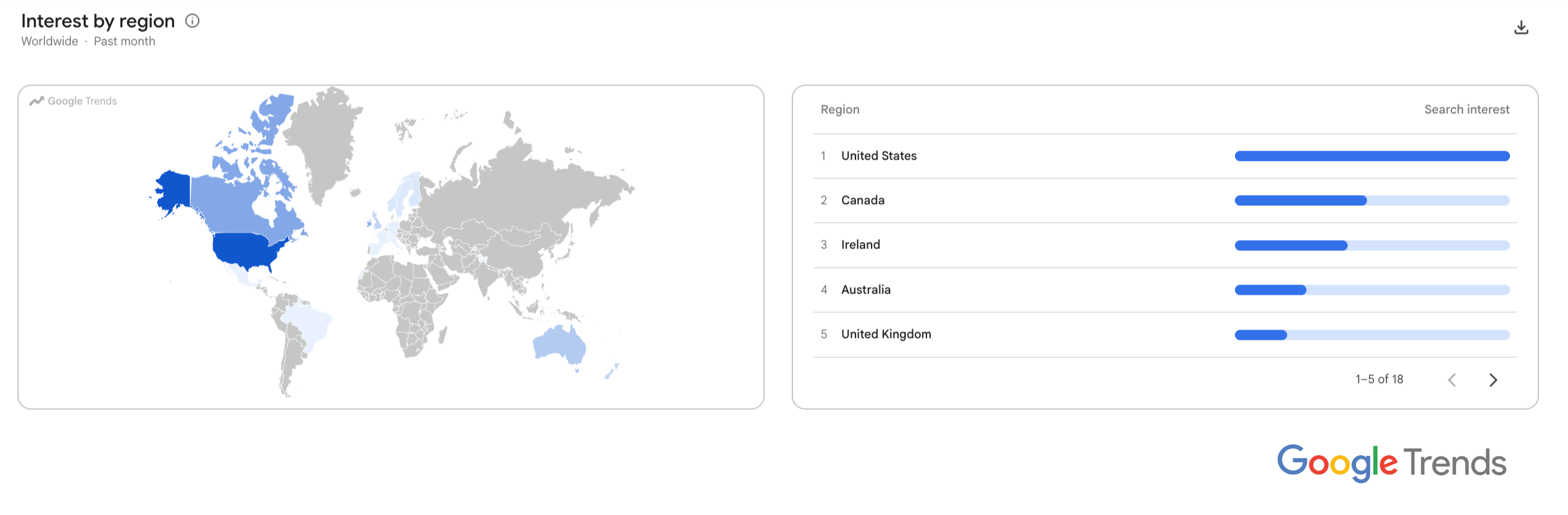
Then I checked to see if this story was that big of a deal in Australia – Trends showed that the top countries searching for this story were the United States first obviously, then Canada and Ireland, followed by Australia and the United Kingdom.
A small venue’s Instagram announcement had become something people were looking up on the other side of the planet.
I thought perhaps it was because it’s such a familiar feeling: drama, financial issues, and mass closures of lesbian bars are happening everywhere.
In Australia, Star Observer has documented the loss of dedicated venues, and how lesbian bars have had to evolve into lesbian nights.
These mass losses of dedicated spaces for lesbians and FLINTA (Femme, Lesbian, Intersex, Non-binary, Trans, Asexual) people all across the world in this story worth taking seriously. So does the prospect of disabled queers losing a place they could attend safely. Both issues are hugely important (personally as a disabled queer woman, both issues truly do matter!) and don’t stop being important because the internet has turned something into a meme.
Could the Last Ditch saga become a movie?
Finally, to make this story even more bonkers, reports have emerged this week, saying that enquiries were being made about turning the saga into a movie or documentary.
The Independent reported on 27 September that UTA, the agency representing the Boston Globe, had been fielding enquiries about scripted and documentary adaptations of Quinn’s article.
Just to clarify — these are initial reports, and this definitely isn’t confirmed yet. Regardless, truly wild stuff if true.
Support the Star Observer… while you still can
LGBTQIA+ media is under threat. Queer content is censored by tech conglomerates who amplify bigotry and push out AI slop — so we receive less financial support than ever.
When our community is muzzled and intolerance intensifies, we need queer media more than ever. Your donation means we can continue paying queer journalists to write queer news.
Don’t rely on the straight lies of big tech – support Star Observer instead and donate now.



Leave a Reply