
Where Are Melbourne’s Lesbian Bars? Queer Women Are Building Their Own Nightlife Instead
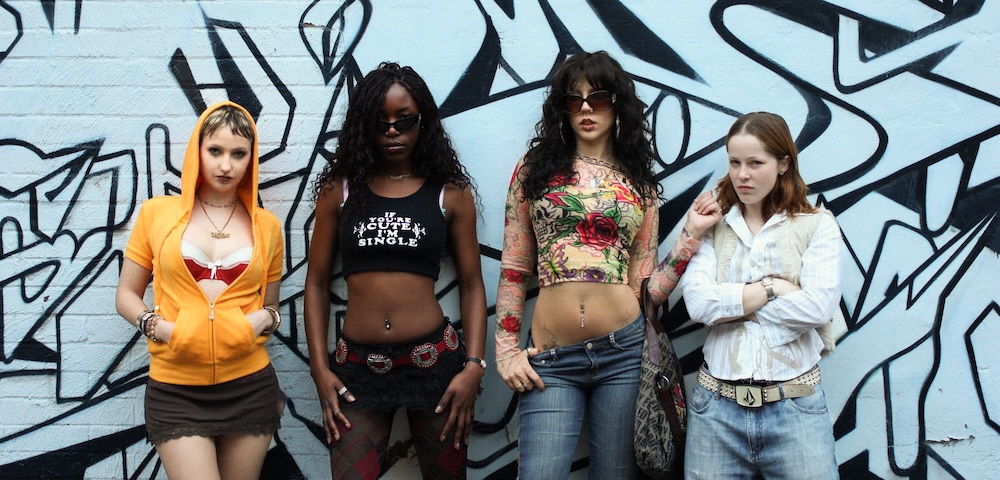
Image: Alice Turner, Tino Wachekwa, Amelia Abboud & Sara Davy. Photo: Supplied
It’s a question you hear a lot: where are the lesbian bars in this day and age? Amelie McIntosh explores how lesbian nightlife has evolved, and how queer women in Melbourne are building their own nightlife.
Amidst the hustle and bustle of Smith Street on a Thursday and Chapel Street’s most popular gay clubs, there is no denying the thriving queer nightlife on display in Melbourne.
Every week, long lines can be found at the most popular gay clubs and bars, including Yah Yahs, Sircuit, and Poof Doof, just to name a few.
However, the popularity of gay male nightlife begets the question – where is the lesbian nightlife in Melbourne?
The quiet disappearance of Melbourne’s lesbian bars has not been for a lack of demand for such spaces. In 2023, Beca Pressing founded Beans Bar in Fitzroy in response to what was seen as a lack of spaces for lesbian and gender-diverse inclusive spaces. This later closed in 2024, joining a growing list of LGBTQIA+ venues closing across Australia.
Amidst the shuttering and closure of venues, young queer women in Melbourne have been increasingly turning towards community-founded events to fill the void of ‘third spaces’, or ‘third place’.
The term ‘third place’ — a place outside of the home for socialisation and forming community — comes from American sociologist Ray Oldenburg. Oldenburg defined their importance in the ability of individuals to put aside everyday concerns, and enjoy the company and conversation of those around them.
These third spaces create an important role in Melbourne’s nightlife for the young queer women who have openly embraced both formal and informal gatherings where they can mingle with others like themselves.
The persistent and overt movement from event founders such as Jessy Brown, founder of Third Rodeo, Juliette Wood and Matilda Quincie, co-founders of Lady Muck, and Alice Turner, Tino Wachekwa, Amelia Abboud, and Sara Davy, co-founders of Dykotomy, has sought to fill these voids for young queer women in Melbourne’s nightlife scene.
I spoke to each of them to find out what role they believe third space events represent right now and in the future of lesbian nightlife in Melbourne. With events ranging from speed-dating to themed club nights and raves, each organisation does something a little differently.
Third Rodeo is based around creating an ambiance and space that is cozy and conversation-based, a step away from the atmosphere of traditional nightclubs. Dykotomy seeks to fill the niche for lesbians who crave something hotter and heavier, a makeout on the dancefloor, and a girl to go home with.
Amidst each of their popularity, with Lady Muck’s 2026 Valentines’ event selling out six minutes after tickets went live, one thing remained clear: the desire for lesbian nightlife in Melbourne.
Each organisation I spoke to emphasised their focus on filling a different niche that they found Melbourne’s lesbian scene to be lacking. Wood and Quincie emphasised their focus on creating community spaces that prioritised welcoming lesbians of all genders to feel safe and welcomed.
“Menace intends to be a space where lesbians and trans folk can meet, mingle, flirt, listen to music, and dance outside of a club environment”, said Quincie.
Abboud and Davy hail from Sydney, where Amelia noted the small differences between lesbian-specific nightclub spaces in Melbourne and Sydney.
“Even though Sydney’s gay nightlife is quite commercial, there’s still something,” they explained.
Popular social events, such as Wayward’s weekly lesbian night Birdcage, represented a space for women and gender-diverse individuals that they found a lack thereof in Melbourne, leading to their inaugural Dykotomy events.
Desire for these spaces also came from the influence of seeing bustling lesbian spaces overseas. Wood and Quincie specifically referenced how Lady Muck was born from a conversation in a lesbian bar in Berlin.
“It was a few days before we moved home, and we were reflecting on how special it had been to have access to bustling lesbian and FLINTA [a term becoming increasingly in its usage, meaning: Femme, Lesbian, Intersex, Non-binary, Trans, Asexual] spaces, and lamenting over the lack of these dedicated spaces in Naarm,” they said.
Turner also expressed how conversations with older generations had shaped their push to catalyse lesbian spaces in Melbourne.
“Whenever I talked to older people about it, when I was trying to promote it, I would tell them that there were no lesbian spaces”, said Turner. “They would be quite surprised, because even just in their perception of Smith Street and Gertrude Street, there was at least one established lesbian bar.”
Turner also emphasised that where historically gay men have been given spaces in which to assert their physical sexuality, Dykotomy is seeking to do the same for queer women.
“There weren’t spaces for getting crazy”, said Turner. “But ultimately we are horny, hungry lesbians, and we wanted to create a place where lesbians could make out, go home with each other, and we saw that spaces like that in Melbourne only existed for gay men.”
In contrast, Brown’s Third Rodeo is a turn away from traditional nightclubs; instead, seeking to create space that is quieter, and rooted in founding connections. With events centred around speed-dating and making community through friendships, it was founded to fill what Brown noted as an absence of permanent lesbian spaces in Melbourne.
All of the event founders that I spoke to for this article acknowledged the boom in lesbian third-space events in Melbourne.
“While there’s still a lack of permanent lesbian venues […] there has been a beautiful surge of lesbian-led event organisers across Naarm”, said Brown. “It shows just how hungry our community is for spaces made by us, for us.”
There are also big plans for the future, with Abboud specifying the importance of these spaces in keeping members of the community paid in the work that goes into organising events such as these. “One of the most exciting things to me is creating a FLINTA economy, where we get to keep each other paid. We can stay in the community, and have a livelihood.”
The tireless work of these founders and the high engagement rates of their events signify the craving and desire of young queer women and gender-nonconforming individuals for spaces made by and for their community.
With the expansion of these events, it demonstrates the desire for spaces in Melbourne designed by and for lesbians, queer women, and non-binary folks.


Support the Star Observer… while you still can
LGBTQIA+ media is under threat. Queer content is censored by tech conglomerates who amplify bigotry and push out AI slop — so we receive less financial support than ever.
When our community is muzzled and intolerance intensifies, we need queer media more than ever. Your donation means we can continue paying queer journalists to write queer news.
Don’t rely on the straight lies of big tech – support Star Observer instead and donate now.