
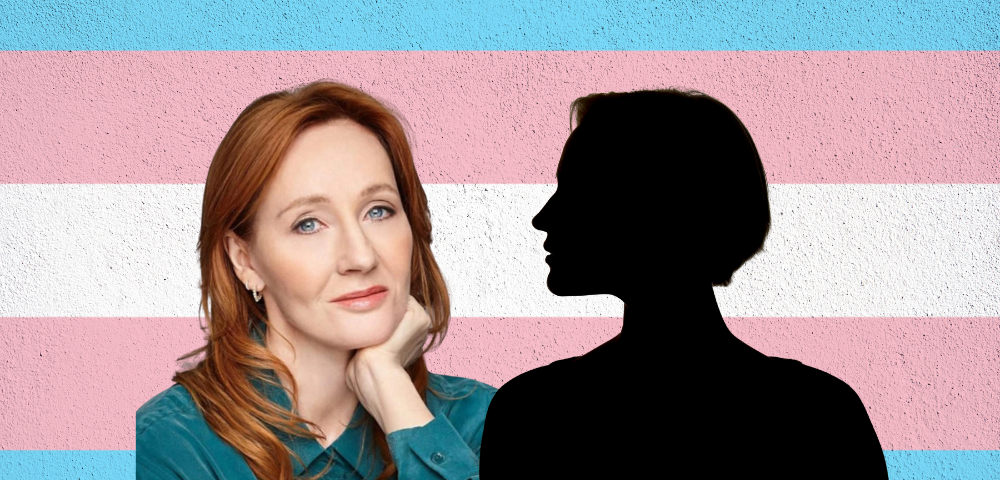
JK Rowling has a trans friend, and her anti-trans fanbase have lost their minds about it – because it highlights the cruel propaganda that anti-trans ideology relies on.
Much has been written about JK Rowling’s transformation from beloved children’s book author into fanatical mould-affected anti-trans campaigner. Her anti-trans rants have only increased in viciousness and regularity since 2018, when she tried to backtrack calling trans women “men in dresses” by saying she’d had a “senior moment.”
The author has likened transition to conversion therapy, called trans women men, bullied multiple sportspeople, mocked the looks of trans women, and even featured in a report connecting Rowling’s years of anti-trans vitriol to the steady rise of transphobic violence in the United Kingdom.
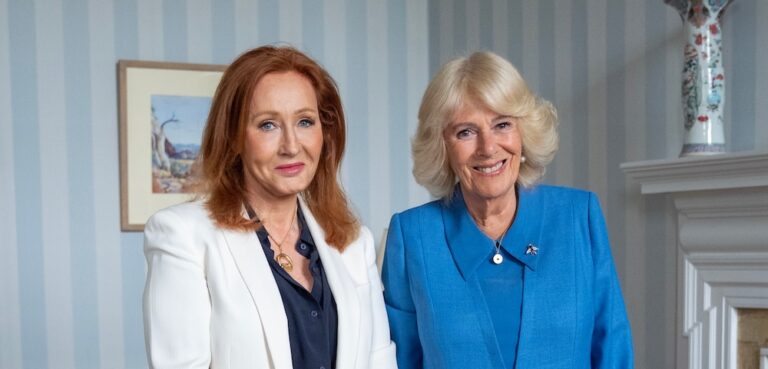
Which is what makes it surprising to her dedicated fans – who affectionately refer to her as “Queen Terf” and often wear masks of her face at gender critical gatherings – that she’s announced that she has a trans friend.
Before anyone thinks this is in any way “woke” of her, it’s not – she still hastens to confirm that she doesn’t respect her friend’s gender and that their friendship is based on her being “one of the good ones”, as this trans friend doesn’t believe she has “literally changed sex either”. However, Rowling does use her she/her pronouns, and does believe she has “female-coded energy”.
“I was being honest about how I feel about an individual trans woman I know, who was a gay man pre-transition, and who I met for the first time post-transition,” she wrote on Twitter. “Objectively speaking, she has physical characteristics that make it fairly obvious she wasn’t born female, but she’s a gentle, funny person I’ve never referred to as anything other than ‘she’ and ‘her’. I find it perfectly easy to reconcile my fond feelings towards her, and my experience of her as someone with very female-coded energy, with a belief that she hasn’t literally changed sex (and incidentally, she doesn’t believe she’s literally changed sex, either).”
A huge backlash from anti-trans activists who identify as having “gender critical” beliefs was quick and savage.
“You can call your ‘friend’ whatever you want but have you ever been out in with this ‘friend’ when he needed to use the washroom? Or the gym? He’s a misogynistic gay man who is either an autogynephile or he’s transing the gay away.”
“She can be, and is, wrong on this and it’s perfectly fine for those of us who disagree with her to call her out for muddying the waters for her own personal pet troons,” wrote another. “Troon” is a slur invented by the far-right and gender criticals in an attempt to insult trans people.
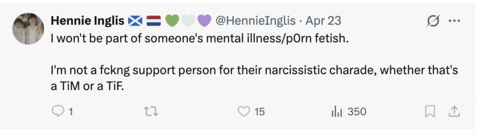
“She’s referring to a man as ‘she’, and claiming that men – MEN – can have “female-coded energy”. Us women have a right to be insulted and upset.”
The majority of responses took issues with referring to a trans person by their pronouns, and the “female coded energy” statement. This makes sense considering she’d earlier proclaimed that she’d go to prison before using correct pronouns for trans people.
But the real reason her followers are so upset is because by giving a tiny, incredibly sparse and conditional moment of humanity to a trans woman, she’s puncturing the lies the anti-trans brigade use to both justify their harassment and bigotry, and the ethical rationale to do it. If you’re not online, and especially if you’re not on Twitter, you might not see the frankly appalling attempts at dehumanising trans people that is extremely common.
Trans people are categorised as fetishists, pedophiles, abusers, predators, homophobes (don’t ask, it’s a ridiculous argument), misogynists, rapists, and more. They are classified as mentally ill. They believe in a completely debunked theory that trans people transition because of “autogynephilia”, a supposed belief that they are sexually attracted to themselves in “female” clothing. They seek to use the bathroom matching their gender because they want to do perverted things, not just take a private wee. All of this is easily disproven, but that doesn’t really matter when it comes to deep-held bigotries.
This is not a niche or extreme position – it’s widely supported across the majority of gender critical accounts. You only need to look at the things JK Rowling responds to or retweets to see that her supposed former “reasonable” beliefs about trans people are a front.
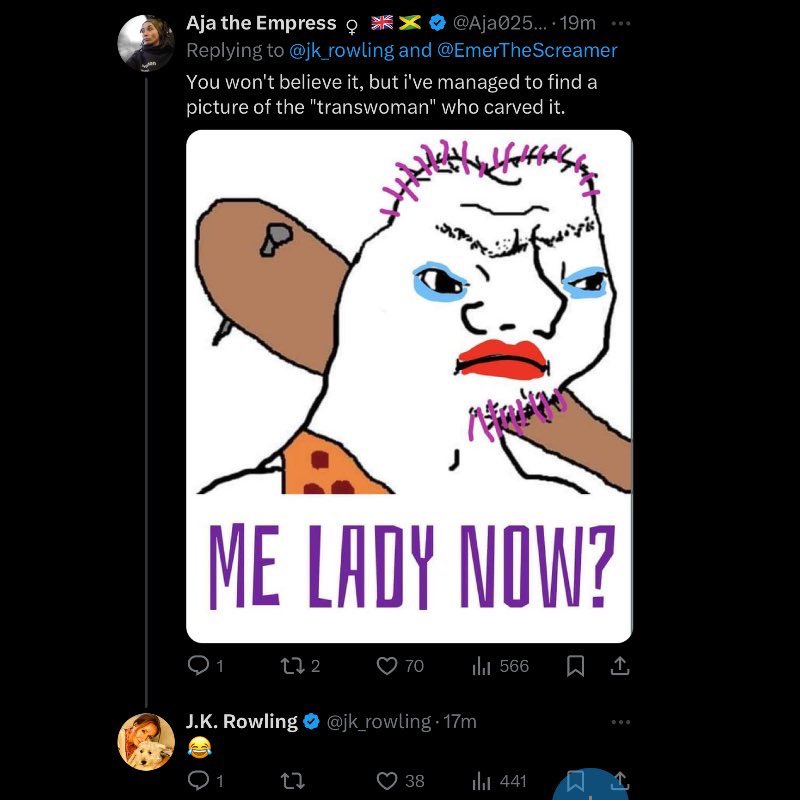
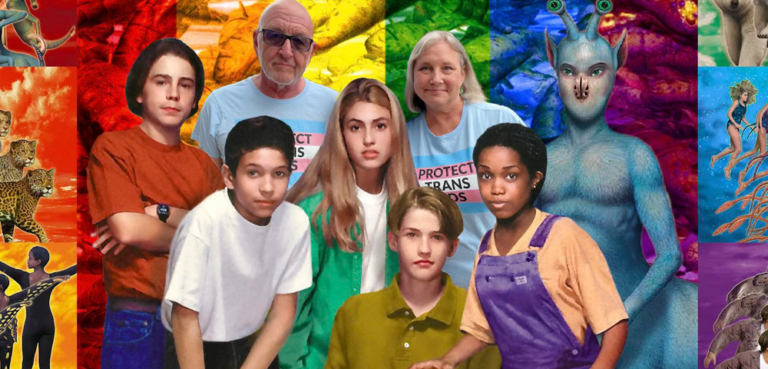
Nobody wants to believe they are a bad person – so in order to justify this kind of abuse and harassment and mockery of trans people, they had to turn trans people into monsters. They are classified as dangers. They are classified as unwell. The support of their rights and dignities is termed an “ideology”. They had to invent a boogeyman to make their run-of-the-mill bigotry into a moral crusade. There’s a kind of Schrodingers trans person situation going on, where trans children are victims of grooming, trans women are all groomers, and trans men simply don’t exist. It’s unclear what age trans people stop being victims and become predators in this ideology. Of course, anyone in the LGBTQ community knows this playbook well – I remember when the bathroom panic revolved around keeping gay men out, casting them as predators and pedophiles too.
One of the favourite games of the gender critical online crew is to breathlessly announce if they see a trans person in the wild – often with brave recounts of moving to a different cashier or proudly wearing a badge in the community pool which identifies them as a transphobe. It plays into the monster narrative – they get excited like they’d seen a Sasquatch in the wild – but it also highlights a fundamental truth: they probably don’t know any trans people. They are mythical to them.
There are multiple studies that prove that it’s very hard to be prejudiced and “other” minorities when you actually know people who identify as that minority group. It’s very hard to believe that they are monsters when you’re hanging out at the local malt shop or taking a class together. When I was reporting on the marriage equality survey, I remember talking to people behind the Yes campaign, who explained that much of their strategy was simply reminding Australia that gays and lesbians and bisexuals weren’t an amorphous evil force coming to devalue your marriage contract or force you to smooch a dude – they were your neighbours and colleagues and friends and family members and Elton Johns. It was harder to dehumanise them that way.
One paper found that people who knew more gay people had more positive attitudes toward gay people, lower levels of prejudice, and in general more progressive and open value systems. Another found the same outcomes by comparing people who knew more than ten gay people with people who knew none.
Obviously there are also the “good ones” – members of the community willing to throw everyone else under the bus for their own comfort. The existence of MAGA gays proves this – but as JK Rowling shows, the humanising effect still works no matter how willing these people are to deep-throat the boot.
With trans people being such a tiny part of the community, there are just less trans people to go around, so that people can understand with first-hand perspective that they are simply other humans, and therefore deserve rights and dignities. But it also makes sense as to why transphobes then classify trans people existing as a “cult” and the increase in trans and gender diverse identification as a trend or a social contagion – the more people know trans people, the more parents have trans kids, the more people who have trans friends, the harder it is to maintain the myth that they are monsters.
I first met a trans person sometime around 2004 – before that I’d literally had no concept of gender diversity, not having seen anyone on my TV or growing up. I also had no idea that bisexuality existed either, and I am one of those, just to put my situation into perspective. Around that time, one of my friends also came out as gender diverse. Now many of my closest and most treasured friends are trans and gender diverse. This is just wildly normal and unremarkable to me.
When I consider the arguments made by the gender critical/ anti trans movement, calling trans people pedophiles and abusers and predators, I think of the friends I just laughed with for four hours while playing Dungeons and Dragons, or the people who helped me move house, or the loved ones who scraped me off the floor after my last shitty breakup. Obviously I don’t believe in trans rights only because I know trans people – I do have ethics. But the deep love and respect I have for my friends is a daily refutation of the propaganda being levelled against them purely because of their identity.
JK Rowling knowing, and refusing to demonise a single trans person punctures a giant hole in the fundamental, core belief of the gender critical campaign – that trans people are irredeemable, potentially criminal, perverted monsters. It also shows why the majority of the world doesn’t support this twisted perspective – because for most people, the LGBTQIA+ community isn’t a hypothetical, but someone they love.
Support the Star Observer… while you still can
LGBTQIA+ media is under threat. Queer content is censored by tech conglomerates who amplify bigotry and push out AI slop — so we receive less financial support than ever.
When our community is muzzled and intolerance intensifies, we need queer media more than ever. Your donation means we can continue paying queer journalists to write queer news.
Don’t rely on the straight lies of big tech – support Star Observer instead and donate now.