
Meet Anna Sheppard: The LGBTQIA+ Changemaker Named The Glynn Legacy 2026 Business Disruptor
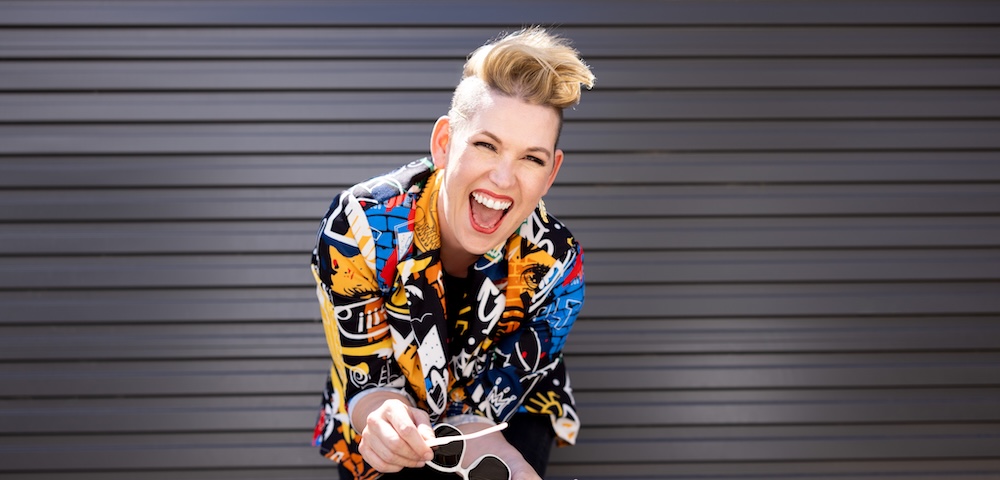
LGBTQIA+ people have always built businesses when doors are closed to us and created community resources when institutions failed us. We’ve alway found creative and radical ways forward when the old ones didn’t work for us. That spirit has continued on through generations, and this is exactly why Anna Sheppard has been named the Business Disruptor at the 2026 iteration of our annual event, The Glynn Legacy.
A social entrepreneur, advocate and changemaker, Sheppard has built a reputation for challenging the status quo and pushing for more inclusive, equitable spaces both within and beyond the LGBTQIA+ community. Their work sits at the intersection of business, social impact and community leadership, making them a fitting recipient of a title that celebrates people willing to shake things up for the better.
Presented by the Pride Business Association and Star Observer, The Glynn Legacy honours the enduring impact of our shared founder, Michael Glynn, whose vision helped shape Australia’s modern LGBTQIA+ media and advocacy landscape. The annual event recognises queer people carrying that same disruptive spirit into a new generation, whether through business, media, activism or community leadership.
This year, Sheppard joins a growing list of LGBTQIA+ leaders who have proved that meaningful change rarely comes from playing it safe.
A Q&A with Anna Sheppard, the 2026 Glynn Legacy Business Disruptor
Can you tell us a little bit about who you are?
I’m Anna Sheppard — a social entrepreneur, producer, speaker and someone who cares deeply about building kinder, more responsible workplaces and communities.
I grew up on the north east coast of England, mostly between Scarborough, Filey and Bridlington, and for periods of my childhood we lived in caravans. Life wasn’t always stable or polished, but it taught me resilience, creativity and how to find joy and humour in small things.
I’m one of five girls and several of my sisters have disabilities, so conversations around inclusion, accessibility and fairness weren’t abstract ideas in our family they were everyday realities. Watching people I loved navigate systems that weren’t built for them shaped how I see leadership and success now.
I’m also non-binary and neurodivergent living with an extremely debilitating invisible disability which has profoundly shaped both my life and my leadership.
Being autistic and ADHD means I experience the world intensely. I notice patterns, dynamics and inconsistencies very quickly, which is incredibly useful in leadership and creative work but it also means I’ve spent a lot of my life trying to navigate systems that weren’t really designed for brains like mine.
I think all of those experiences taught me something really important very early on: every single person has impact and influence, whether they realise it or not. The way we speak to people, include people, lead people or dismiss people can genuinely change someone’s trajectory.
And what do you do for work?
I founded Bambuddha Group and Bambuddha Bambuddha Studios.
We work across responsible leadership, people and culture, storytelling, media production and social impact. A lot of our work sits at the intersection of business and humanity helping organisations become more inclusive, ethical and emotionally intelligent while also creating meaningful impact.
A huge part of my work is helping people understand their impact and influence more consciously. Most people think influence belongs only to CEOs, celebrities or politicians, but that’s not true. Influence exists in every conversation, every workplace and every community.
Through the studios, we also produce podcasts, campaigns and content that amplify important conversations and underrepresented voices.
Basically, I spend a lot of time trying to prove that businesses can still be commercially successful without treating people like robots running on caffeine and anxiety.
Our mission is to Catalyse a Global Shift to Responsible Leadership over the next decade.
How did it feel when you found out you’d been named a disruptor at this year’s Glynn Legacy event?
Honestly, it felt really emotional. I think when you spend years trying to build things differently, you don’t always stop to realise people are noticing because most days you’re just trying to keep the wheels on, answer emails and remember where you left your coffee.
What made it especially meaningful was that the recognition came from community. That matters far more to me than status or titles ever could.
It also reminded me that we often underestimate our impact. Sometimes the conversations you think nobody is listening to end up changing someone’s perspective, confidence or sense of belonging in ways you never fully see.
The awards recognise “disruptors”. How do you feel about being called that?
I actually quite like the word “disruptor,” although I know it can sound a little chaotic like someone’s about to flip a boardroom table and launch a start-up about microdosing.
But meaningful disruption, to me, is really about challenging systems that no longer serve people well and creating something more human in their place.
I think the world needs more people willing to ask, “Is this actually working for humans?” instead of blindly continuing things simply because that’s how they’ve always been done.
And I think truly understanding your influence means recognising that disruption doesn’t always have to be loud. Sometimes it’s a quiet conversation, a brave boundary, an inclusive decision or choosing kindness in an environment that rewards disconnection.
When most people hear the word “disruption”, it may seem a little negative or chaotic. But “disruption” can mean very different in a professional setting: what does meaningful disruption actually look like in your industry?
In my industry, meaningful disruption looks like moving away from performative diversity and towards genuine inclusion. It means leaders being measured not only by profit, but by impact, wellbeing and responsibility.
It looks like creating workplaces where people don’t have to mask parts of themselves to survive professionally — especially LGBTQIA+, disabled and neurodivergent people.
It also looks like telling more honest stories in media and business instead of polished corporate perfection.
And honestly, sometimes disruption is simply saying, “I don’t think burnout should be considered a personality trait.”
I think meaningful disruption also starts when people become more conscious of the ripple effect they have on others. Leadership isn’t just what happens on stages or in boardrooms. It’s how safe people feel around you. It’s how you communicate under pressure. It’s what behaviours you normalise without even realising it.
As LGBTQIA+ people, do you think we’re still expected to fit into certain boxes in professional spaces? How have you navigated that?
Absolutely. I think many LGBTQIA+ people still feel pressure to make themselves understandable or comfortable for other people especially professionally. There can still be this quiet expectation to fit neatly into categories or tone down parts of yourself.
For a long time, I tried very hard to be “professional” in the traditional sense, which often meant masking parts of who I was particularly as a non-binary, disabled and neurodivergent person.
But eventually I realised authenticity isn’t a branding exercise it’s survival. The more honest I became about who I am, the more meaningful and impactful my work became too.
I’ve learned the right environments don’t just tolerate difference …they benefit from it. And honestly, when people fully understand their own impact and influence, they become less interested in fitting into boxes and more interested in creating spaces where other people don’t have to either.
Have there been moments where you’ve challenged an accepted way of doing things and been told it couldn’t be done?
Constantly. Especially when building a business that combines social impact, media, leadership and commercial sustainability. People often want you to pick one lane.
I’ve been told ideas were “too human,” “too emotional,” or “too values-driven.” Yet increasingly, those are exactly the conversations people are craving because so many people are exhausted by performative corporate culture.
A lot of people still underestimate the value of empathy, inclusion and emotional intelligence in leadership until a workplace culture collapses without them.
I think one of the biggest lessons I’ve learned is that people often underestimate their own ability to create change because they assume influence only belongs to people with titles. But culture is shaped every day by ordinary interactions, not just executive strategy documents.
What barriers do queer people still face in media and business that perhaps aren’t always obvious from the outside?
One of the biggest invisible barriers is the emotional labour of constantly assessing safety. Even in progressive industries, many queer people are still quietly calculating: “Can I fully be myself here? Will this impact opportunities? Will I have to explain myself?”
For neurodivergent and non-binary people especially, there’s often pressure to mask or adapt ourselves to fit systems that weren’t designed with us in mind.
There are also still major representation gaps, particularly for trans people, non-binary people, queer people of colour, disabled queer people and older LGBTQIA+ communities. Visibility has improved, but not evenly.
I also think many workplaces still underestimate how much influence culture has on wellbeing. Small comments, exclusion, assumptions or unconscious bias may seem insignificant individually, but over time they shape whether someone feels psychologically safe enough to thrive.
Representation has improved in many ways over the past decade, but where do you think the biggest gaps still exist?
I think one of the biggest gaps is still intersectionality. We often celebrate diversity in ways that feel safe, polished or marketable, but communities are far more complex than that.
We need more representation of trans and non-binary leadership, disabled queer people, neurodivergent people, First Nations queer voices, queer people of colour and people from working-class backgrounds.
I’d also love to see more representation of people being allowed to be fully human not perfect, not inspirational all the time, just real.
Because visibility isn’t just about being seen. It’s about expanding people’s understanding of who is allowed to lead, create, influence and belong.
What role do visibility and authenticity play in leadership today?
Representation matters because people need evidence that they belong. Sometimes seeing someone who sounds like you, thinks like you or comes from a similar background quietly changes what feels possible.
But authenticity matters just as much. I think people are becoming very good at spotting performative leadership. The leaders people trust now are often the ones willing to admit they don’t have all the answers and who lead with curiosity, accountability and humanity rather than perfection.
I think vulnerability, when grounded in accountability, is becoming one of the most important leadership skills of our time.
And I think understanding your impact and influence is a huge part of modern leadership. Every leader sets the emotional tone of the spaces they enter whether intentionally or unintentionally. People remember how you made them feel long after they forget a strategy document or LinkedIn post.
For younger LGBTQIA+ people looking at your careers and wondering if there’s a place for them in media or business, what would you tell them?
There absolutely is a place for you. And not because you need to become exceptional to earn your place …you already belong.
Your perspective matters precisely because it’s different. The world does not need more copies of the same voice. It needs people who think differently, feel deeply and imagine new ways forward.
I’d also say: don’t underestimate your impact. You do not need to have a massive platform to influence the world around you. The way you lead your friendships, your workplace, your creativity and your community matters more than you probably realise.
Also, please don’t confuse professionalism with suppressing your personality. Some of the most impactful people I know are deeply human, wildly creative and occasionally held together by iced coffee, spreadsheets and pure determination.
If we were having this conversation again in five years’ time, what change would you hope to see in Australia’s media, business, and LGBTQIA+ communities?
I’d hope Australia had moved beyond surface-level inclusion into something much deeper and more courageous.
I’d love to see workplaces where wellbeing, accessibility and inclusion are built into systems rather than added on and amped up for marketing campaigns. I’d love to see more queer, disabled and neurodivergent leadership across all levels of media and business especially leadership that reflects the full diversity of our communities.
I’d also love to see more people understanding the responsibility that comes with influence. Not influence in the social media sense influence in the human sense.
The way leaders speak, businesses behave and media tells stories genuinely shapes culture. And of course, I hope we become a little kinder.
The world feels very loud and polarised right now, and I think one of the most radical things we can do is create spaces where people feel safe, seen and connected without losing complexity or truth.
Want to join us at The Glynn Legacy 2026? Get your tickets here.

Support the Star Observer… while you still can
LGBTQIA+ media is under threat. Queer content is censored by tech conglomerates who amplify bigotry and push out AI slop — so we receive less financial support than ever.
When our community is muzzled and intolerance intensifies, we need queer media more than ever. Your donation means we can continue paying queer journalists to write queer news.
Don’t rely on the straight lies of big tech – support Star Observer instead and donate now.