


“The Worst Part Was The Shame”: What Happened After Jack Was Lured Into A Gay Hate Crime Ambush Off Grindr
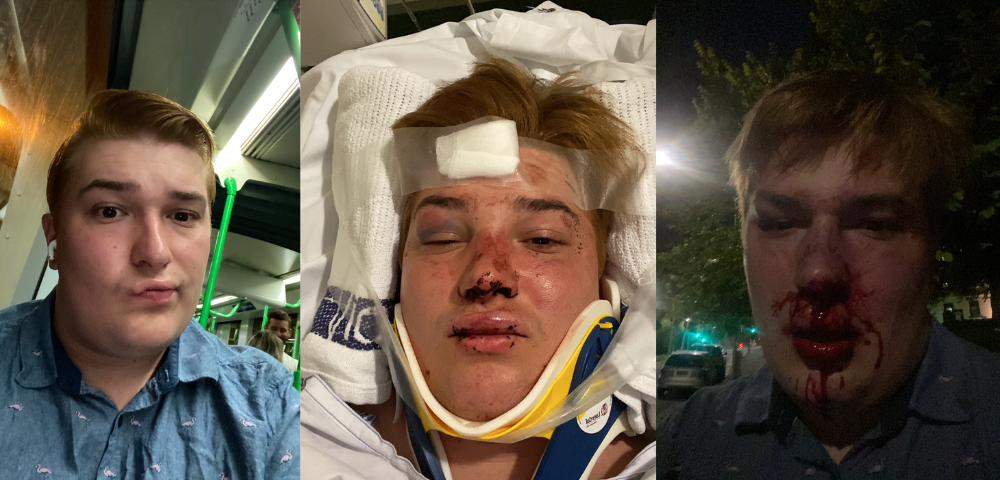
Image: Jack Jacobs met up with someone from Grindr and was attacked by a group of teens. Images supplied
In February 2020, Jack Jacobs was on a tram in Melbourne, planning to go out clubbing, when he began chatting with “someone” on Grindr who was around his age, and decided to stop off near Fitzroy Gardens to meet them and get some food.
“When I got there, I realised immediately that something was off,” he told Star Observer.
A group of about eight or nine teenaged boys appeared and began chasing Jacobs, who was in his late 20s at the time, catching him quickly and throwing him to the ground where they kicked him repeatedly.
“Every time I was kicked in the head, everything went white.”
He eventually managed to escape, running towards a nearby car full of people – but they drove off instead of helping. Thankfully, his attackers didn’t follow.
“I tried to call triple zero, but my phone screen was covered in blood and wouldn’t respond to touch, so I had to peel off the screen protector to make the call.”
A young woman stayed with him until the ambulance and police arrived.
“When the police got there, they took a brief statement, but I didn’t mention it was a Grindr meet-up because I felt too ashamed and worried about being judged or accused of something,” says Jacobs, claiming instead that he’d been randomly attacked.
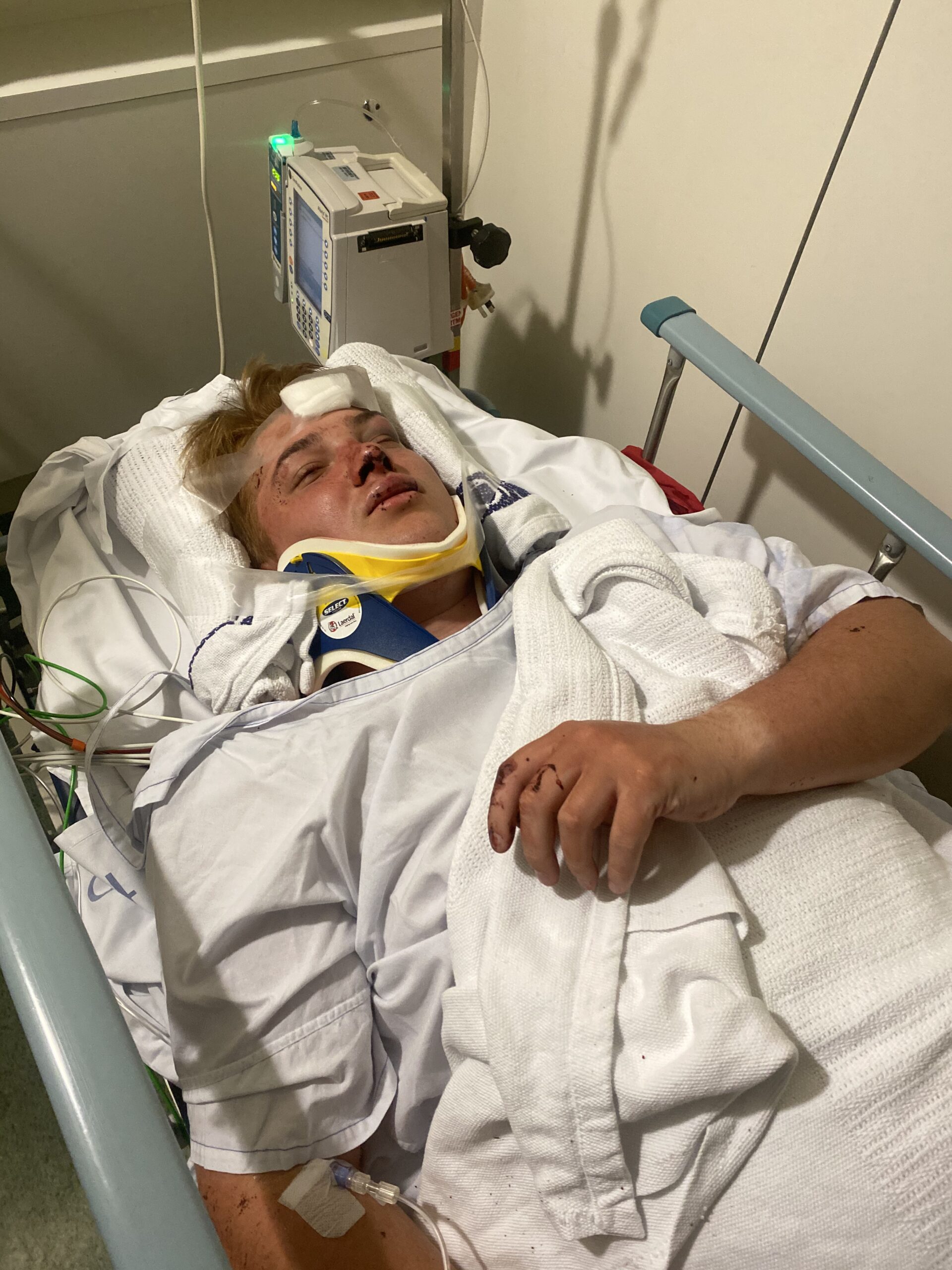
At the hospital, he was checked for head and wrist injuries, and in the weeks after was diagnosed with two torn ligaments which needed surgery.
Anti-LGBTQ hate crimes on the rise
Jack’s horrific beating is sadly only part of a sharp uptick in anti-LGBTQIA+ hate crimes, with many of them specifically targeting gay and bisexual men who use dating and hookup apps like Grindr or Wizz.
In the last few weeks, we’ve seen the ABC release a two-year investigation into hate crimes with distressing footage of Islamic State sympathisers hunting and bashing gay and bisexual boys and men on camera in Sydney. Using freedom of information laws, they were able to discover that almost 200 incidents of anti-LGBTQIA+ hate crimes have been reported in NSW since only 2023.
Meanwhile, Victoria has set up a parliamentary inquiry into these crimes, with Victoria Police confirming that over 35 individuals were arrested for these kinds of crimes over 2024-2025.
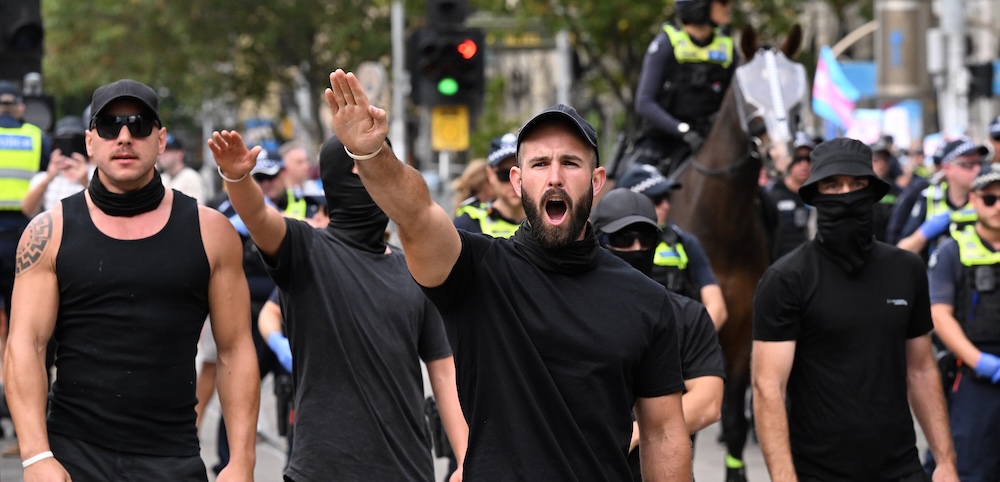
While “gay bashing” and these sorts of crimes unfortunately have a long history in Australia, with dozens of gay men murdered by groups of youths in the 80s and 90s, the current iteration is coming from young men radicalised into hate ideologies.
“We are seeing ideological convergences across Islamic extremist, far-right and other grievance-based movements that frame both Jewish Australians and LGBTQIA+ people as threats,” writes Josh Roose, an extremism researcher at Deakin University in The Conversation.
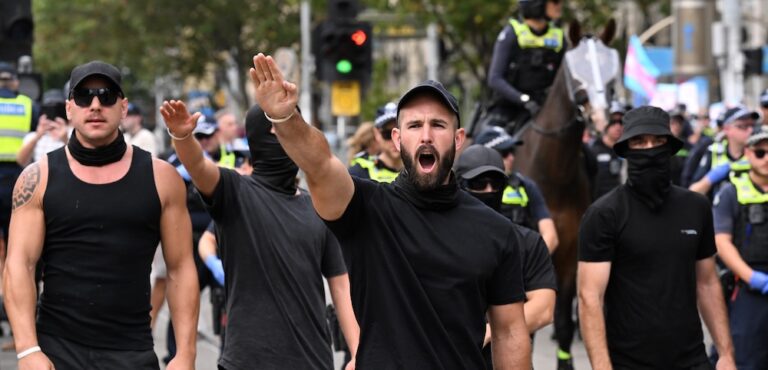
Roose found the ABC footage “sickening” but not surprising, saying that his research has found that the Islamic State recruits from young, disenfranchised men and boys, who are attracted to ideas of dominance and strength. But he also points out that it’s not only Islamic extremism driving rampant homophobia, pointing to far-right groups in Australia such as the National Socialist Network, which was also pointed out in the Victorian inquiry motion, along with concepts like the “manosphere”.
“Based on research and the extremism I study online, authorities should be seriously concerned about these sorts of hate crimes towards LGBTQIA+ people.”
“Shame stops people reporting” gay hate crimes
“Looking back, the worst part was not just the physical injuries. It was the shame,” Jacobs reflects.
For a long time, he only told people that he had been randomly attacked while walking home.
“I didn’t want it to look like I was going out for a hookup, which was clearly the intent,” he says. “I was too ashamed and worried about being judged. I just did not want to deal with the judgment or have to explain what Grindr was.”
He says that a large part of the reason why he didn’t want to report to the police was about potential repercussions from them, saying “you never really know where people stand”, so he only gave a brief statement to them, claiming it was a random attack.
“And I think just with everything that’s going on, you look at the police and you’re like, nah, don’t trust them.”
Several months after the attack he approached the Victorian Police, needing to get the statement or the police report number to access the Victims of Crime financial assistance scheme to help with his recovery, but discovered that they’d “never done anything with my statement, so there was no record of it that they could find”.
View this post on Instagram
Jack then tried to reach out to the Victoria Police LGBTIQA+ Liaison Officers (LLOs) to properly report the crime, but found the process too long and “gave up”.
“A couple of weeks later I got a response from a Senior Constable at Melbourne West who apologised for the delay — she’d been on night shift — and asked for my contact number to follow up by phone. But by then, life had moved on,” he said, saying that he’d relocated from Melbourne to regional NSW for work and didn’t have the energy to keep pushing something that felt like it was going nowhere, five years after the fact.
“I think that experience really illustrates the problem – shame stops people reporting at the time, and then when they finally do work up the courage to come forward, the system is slow and the burden falls entirely on the victim to keep chasing it up,” he said.
In a statement to Star Observer, a Victoria Police spokesperson confirmed that they treat incidents of this nature with the utmost seriousness, and “urge anyone who has experienced this behaviour to come forward and make a report to police so we can investigate and track down the offenders responsible.”
“Once a report has been made to police, victims can ask to speak with one of the 600 LGBTIQA+ Liaison Officers statewide. We want victims to know it is never too late to make a report – so when you’re ready, please speak to us.”
Taking accountability
Jack says that the scariest thing is how much more common these kinds of attacks are, and points at the dating apps as needing to take more responsibility.
“After the attack, the attacker’s Grindr profile disappeared immediately – they must have blocked me – which meant I lost all the chat history, photos, everything. There was no way to preserve any evidence,” he says, which would be an easy way for the app to help with these investigations.
“Grindr also does not have any proper face verification, unlike some other apps. That makes it easy for people to make fake profiles, and the lack of accountability just puts people at more risk. I think apps should require better ID and face checks, and make it easier for people to report and retain evidence when something goes wrong,” says Jacobs.
Star Observer has reached out to Grindr and Wizz for comment. In response to previous attacks, Grindr started providing pop-up safety messages for users, warning them of the risk of violence and providing tips to stay safe.
Jack says that he doesn’t really use Grindr anymore, as a result of his attack.
“I do not meet people online at all without vetting them, I have become a lot less trusting, and I struggle to be as social as I used to be. I have just had to move on the best I can. The only reason I am talking about it now is because I want people to realise this still happens, and that nobody should feel alone or ashamed if it happens to them.”
If this story has raised any issues for you, you can contact Lifeline on 13 11 14.
Thorne Harbour has released a guide on ways to stay safe while using dating and hookup apps.
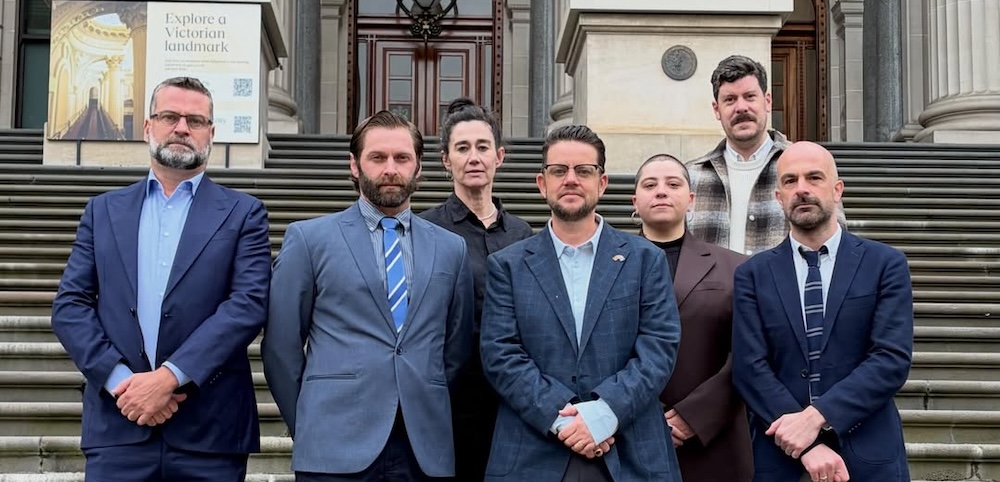
They’re also calling for LGBTIQA+ community members who have experienced harassment, intimidation or violence to come forward and confidentially share their experiences as part of the upcoming Victorian Parliamentary Inquiry into hate crimes.
Support the Star Observer… while you still can
LGBTQIA+ media is under threat. Queer content is censored by tech conglomerates who amplify bigotry and push out AI slop — so we receive less financial support than ever.
When our community is muzzled and intolerance intensifies, we need queer media more than ever. Your donation means we can continue paying queer journalists to write queer news.
Don’t rely on the straight lies of big tech – support Star Observer instead and donate now.

Maybe I missed it in this report, but when reports of thse gay hate crimes by teenagers and radicalised Islamist young men eventually surfaced in the broader media we were told that despite being found Guilty not one of these males got a prison sentence and a criminal record was Not palced upon any of them! They were simply put on a Good Behaviour Bond for a relatively short time and allowed to go home.. It would appear that members of the Judiciary don’t think these Crimes Against Humanity are serious and, though they would vehemently deny it, are as homophobic as the perpetrators. Were any of these criminals holders of Dual Citizenship? If they were why were they not deported? I don’t care what age these males were/are, they committed Crimes of Hate and should all be held Fully Responsible, sent to prison (it should also be noted that not one Police Force has appealed these non-sentences imposed by the Judiciary as being manifestly inappropriate. Are they also every bit as homophobic as the Juduciary has proved itself to be?)
After having served the Maximum Prison Sentence any with Dual Citizenship should immediately be deported and if that means being sent back to a war-torn country so be it!
Actually, you’ll find that Grindr does in fact have proper face recognition and every profile no matter how long you’ve had it has to go through the facial recognition to be able to continue using the app at all. It’s very recent and new, but definitely came in to play at least in NSW prior to 2 March 2026, so I would think that fact checking of details needs to be a bit more thorough.
This however does not in anyway change how horrific these attacks are, and the lasting affect they have both physically, emotionally and mentally on victims as well as the vicarious trauma felt by their family, colleagues and friends etc…
Huge respect to Jack for having the courage to step up and make the statement and shine a light on these hideous acts of pure hate.