


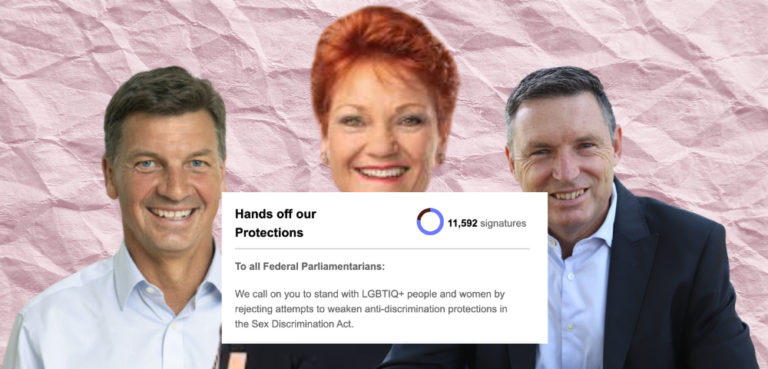
Why The Hell Wouldn’t LGBTQ+ People Be Included In The New Hate Speech Laws?

Image: Australian Prime Minister Anthony Albanese and Australian Foreign Minister Penny Wong speak to the media during a press conference at Parliament House in Canberra, Tuesday, January 13, 2026. (AAP Image/Lukas Coch
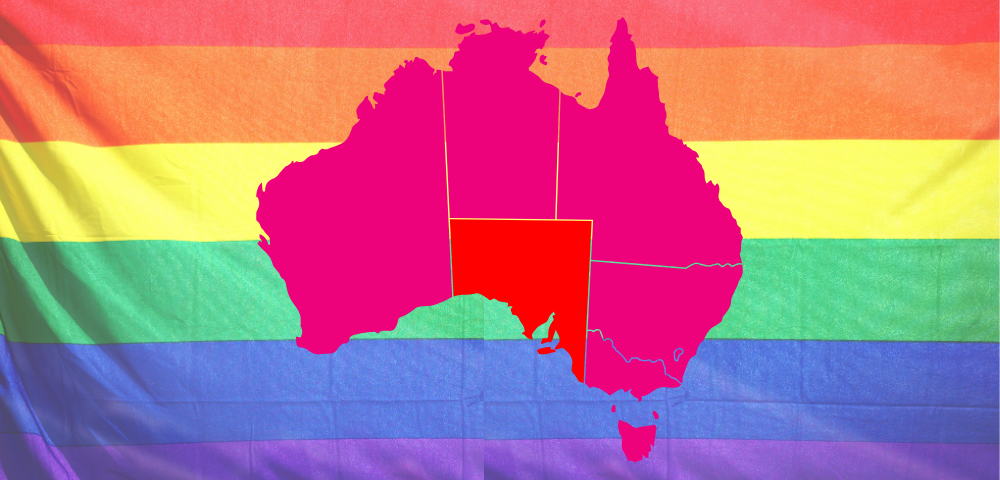
As the federal government moves to overhaul Australia’s hate speech laws, LGBTQIA+ Australians have once again been excluded from protections designed to curb vilification and violence.
It’s a decision that lands with… not really shock, I suppose. Something closer to fatigue, I guess? The kind that comes from watching lawmakers make laws designed to protect people from harm quietly decide, yet again, that our wellbeing, mental health and physical safety is optional.
The proposed reforms promise tougher action against hate, but the detail tells a different story. Protections against promoting or inciting hatred are limited to particular groups, while LGBTQIA+ people have been excluded from aggravated sentencing provisions. The implication is hard to ignore: some forms of hatred warrant intervention, others are expected to just… just fucking deal with it, I guess. Suck it up and shut up.
Equality Australia‘s legal Director Heather Corkhill said the reforms fail to meet the moment.
“Hatred in any form – whether racial, religious or targeting LGBTIQ+ people or people with a disability – has no place in our society,” Corkhill said. “Serious vilification laws must apply equally. The government should be stopping all hate before it turns violent, not creating tiers of protection.”
For LGBTQIA+ Australians, this isn’t an abstract policy flaw. It sits within a long and painful historical context.
Our communities know what happens when hate is minimised, excused, or left unchallenged. I am in my 30s, but there is a element of… lets call it (for lack of a better term) ‘intergenerational trauma’, when it comes to our community and our history. Even if we haven’t experienced certain eras of hate ourselves, our community’s oral storytelling traditions mean that every queer person that’s been welcomed with open arms has heard, from the horses’ mouths, tales of hate, heartbreak, violence, murder. So if we do not remember first-hand, we still remember.
We remember criminalisation and police raids. We remember being fired, institutionalised, beaten, and blamed. We remember decades where violence against queer bodies was dismissed as inevitable — or worse, warranted. We remember the AIDS crisis met with silence and moral panic, and we remember mourning alone. We remember taking care of gay and bisexual men and transgender folks who were dying in hospitals as the heteronormative world blamed them for their ill health; writing off their deaths and sickness as justified. We remember trans lives erased entirely from public conversation, from our own history. We are watching some of these things happening still; happening again.
Protections were never handed to us easily. They were fought for, often after irreparable harm had already been done, and lives lost.
That history matters — especially now. Because hate is not theoretical, it never goddamn has been. It’s loud and brash and arrogant, yet organised. And right now, it is increasingly fucking emboldened.
Across Australia, LGBTQIA+ people are experiencing rising levels of harassment, threats, and abuse. Some of it takes place online, but its consequences spill into schools, workplaces, streets, and homes.
Trans people, particularly trans women, are routinely dehumanised in political debate, media commentary and now, healthcare policy. Drag events are targeted. Rainbow families are harassed. Queer young people are told, explicitly and implicitly, that their existence, health, and happiness is something to be debated, without their own voices ever being a part of it. (And a debate that doesn’t include lived experience makes for a pretty shit debate, in my experience.)
“Intimidating rainbow families online, calling for the destruction of trans people or threatening gay men on the street is equally vile and must be stamped out,” Corkhill said.
That reality has been echoed by voices within Australia’s Jewish LGBTQIA+ community, who have warned that the same forces driving antisemitic violence are fuelling attacks on queer and trans people.
In a press release, Aleph Melbourne spokesperson Michael Barnett said it was deeply troubling to see protections split along lines of identity.
“It makes no sense to us that half our identity is protected from hate and the other half isn’t,” Barnett said.
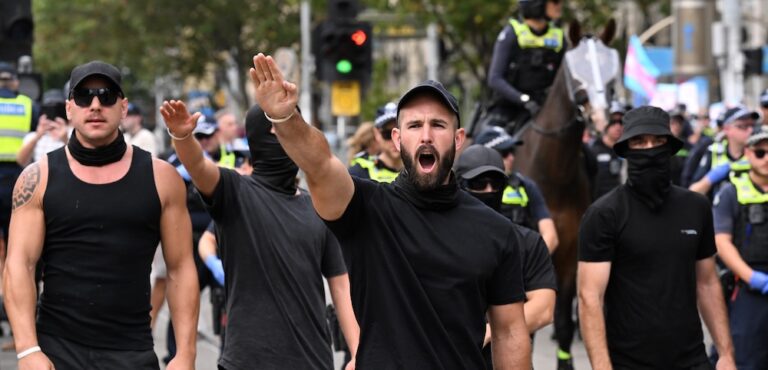
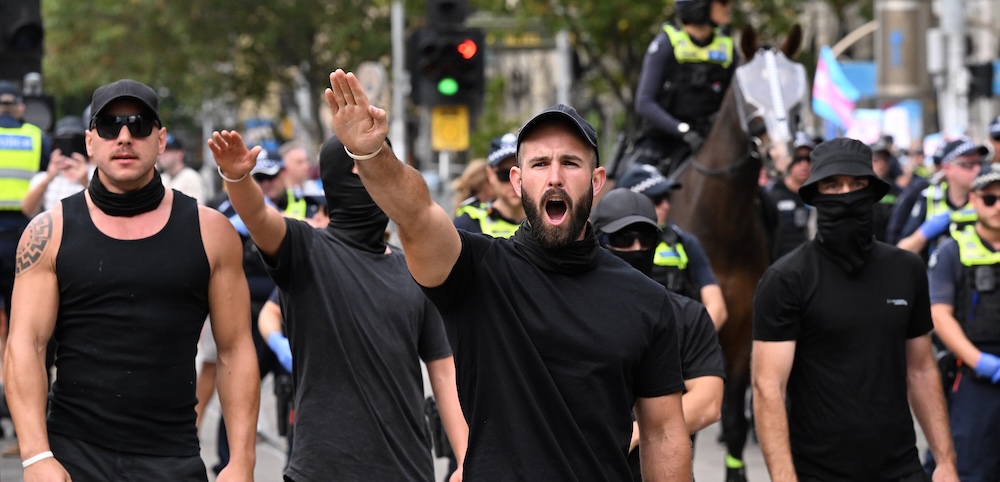
“The same ideology is being used to drive attacks on both the LGBTIQA+ and Jewish communities. Neo-Nazis and white supremacists want to eradicate gay and trans people as much as they want to eradicate Jews.”
Barnett noted this shared threat is precisely why some major Jewish bodies with have supported stronger protections for LGBTQIA+ people in recent years. (It should, however, be noted, not all.)
“We call on the government to treat anti-LGBTIQA+ hate as seriously as antisemitic hate. There is no room for either in Australia.”
This moment is not occurring in isolation, all across the world. The resurgence of far-right politics has been accompanied by a sharp escalation in anti-LGBTQIA+ rhetoric and policy.
Attacks on queer communities are not a side effect of rising fascism — they are one of its most reliable markers of its occurrence. History shows, repeatedly, that when authoritarian movements gain traction, queer people are among the first to be targeted.
Australia is not immune to these currents. We see them reflected in culture-war politics, in the normalisation of inflammatory language, and in policy decisions that quietly draw lines around who is worthy of protection.
Despite this, LGBTQIA+ communities were excluded from consultation on the draft bill altogether.
“We have been left in the dark,” Corkhill said, “even though the criminal law being amended recognises us as an at-risk group, and despite calls from Jewish leaders to extend protections to all attributes.”
Just.Equal Australia spokesperson Rodney Croome warned that legislating against only one form of hate risks legitimising others.
“Passing laws against only one kind of hate means other forms are seen as legitimate and less deserving of a response,” Croome said.
“One important lesson from the Bondi tragedy is that the government shouldn’t wait until attacks escalate before taking tough action against hate.”
“The Prime Minister [Anthony Albanese] has said ‘more could have been done’ to prevent the Bondi attack, so let’s now do more, not less.”
So – this is not, or least, SHOULD not, about competing harms. Protecting Jewish people from rising antisemitism is vital. So is protecting every community targeted by the noteiceably increasing hate.
Creating a hierarchy of protections does not strengthen social cohesion, it undermines it, and history shows us this time and bloody time again. It signals that some communities deserve urgent safeguarding, while others must wait their turn – and lives are often lost in that interim.
“No one should be targeted because of their race or religion – and no one should be targeted because of their sexuality or gender identity,” Corkhill said. “If hate is unacceptable for one group, it must be unacceptable for all.”
This is not a radical demand. At a time when hate is becoming more coordinated and more visible, exclusion is not just an oversight — it is a calculated risk. Laws that fail to name LGBTQIA+ people leave space for harm to grow unchecked, and they tell those who would threaten us that the consequences may be lesser, or absent altogether.
We have spent generations fighting to be seen, named, and protected, and to be written into the law as people whose lives matter.
Being left out now, of all moments, is not just disappointing – it is infuriating, and it is unforgiveable. But it is something this government still has time — and responsibility — to fix.
So, Albanese – fucking fix it.

Thanks for being someone we can always count on for authentic inspiration