
Contentious Hate Speech & Gun Laws Passed In Late-Night Marathon Sitting
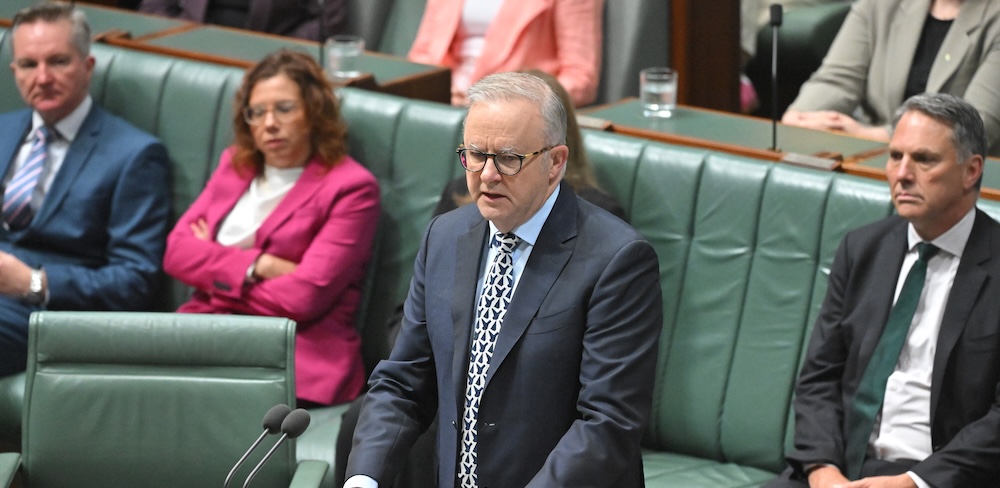
Image: Prime Minister Anthony Albanese during a federal parliament sitting at Parliament House in Canberra, January 21, 2026. (AAP/Mick Tsikas)
In the late hours of Tuesday evening (January 20), federal parliamentarians passed the controversial suite of hate speech and gun laws in a lengthy late-night vote.
The Combatting Antisemitism, Hate and Extremism Bill 2026 — part of a package of reforms responding to the December mass shooting at a Jewish festival in Bondi Beach that claimed 15 lives — cleared the Senate after Labor struck an agreement with Liberal MPs secure enough to outflank opposition from Nationals senators.
The vote marks the first major overhaul of federal hate speech law in years and gives the Commonwealth stronger legal tools to designate extremist and hate groups.
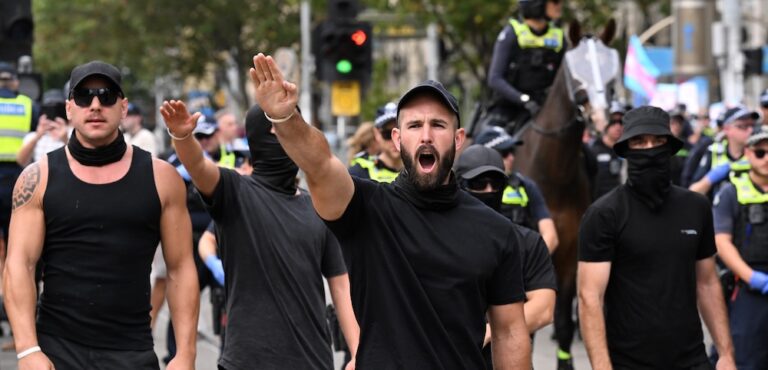
Powers to designate organisations as “hate groups” mean members could face prison time, with the government saying the law would target neo-Nazi groups and radical Islamist groups.
An amendment to criminalise the burning of the Australian flag was moved and failed.
Prime Minister Anthony Albanese told media in Canberra today the packages were “not as strong” as the original bill, but also said they were among the “strongest hate laws ever seen in Australia”.
The new gun laws — which Coalition, One Nation and United Australia Party senators unsurprisingly voted against — will limit imports of guns to Australian citizens, as well as place stronger restictions on the type of guns that can be imported.
A feature of the gun laws is a national buyback scheme, which Queensland Premier David Crisafulli has said Queensland would not participate in. Albanese responded via the press conference that he respectfully disagrees, saying, “I don’t think it is in the interests of Queenslanders or the nation not to have national uniform laws.”
Sitting sees Coalition breakup
The path to last night’s vote was anything but smooth. The Nationals ultimately opposed the legislation in the Senate, with several senators crossing the floor to vote against the bill’s final form amid concerns about civil liberties and legislative drafting.
Opposition Leader Sussan Ley, leading the Liberal negotiation team, framed the deal with Labor as a targeted effort to “keep Australians safe,” arguing that the bill’s focus on extremist organisations and clear hate-motivated conduct struck a workable balance.
“In the national interest, the Liberal party has today stepped up to fix legislation that the Albanese government badly mishandled,” Ley said in a statement. “We have succeeded in narrowing the scope of this bill to deal with what we said it should do – tackle antisemitism and tackle radical Islamist extremism.”
Still, the final legislation sits unevenly between competing democratic ideals. Some critics expressed that the powers to blacklist groups and cancel visas for individuals spreading hate could be wielded without sufficient procedural oversight.
“This terrible deal between Labor and the Coalition will have a chilling effect on political debate, protest, civil rights, and people speaking up about civil rights abuses across the world. The Greens will vehemently and strongly oppose this bill,” said Mehreen Faruqi, the Greens antiracism spokesperson.
Others warn that by excluding broader vilification provisions — including those that would protect LGBTQIA+ people, people with disability and other minorities — the law creates a hierarchy of who is worthy of protection. t.
Hated speech laws don’t protect LGBTQIA+ people, advocates say
Praise for swiftness of the new hate speech laws has been minimal at best within LGBTQIA+ advocacy circles, who have long argued that Australia’s legal framework does not comprehensively protect people from hate on the basis of sexuality, gender identity and sex characteristics.
Ahead of the vote, groups such as Equality Australia warned the draft legislation “fails to adequately protect LGBTIQ+” people, urging lawmakers to broaden the scope so that no Australian was left without legal redress if targeted for who they are. “If hate is unacceptable for one group, it must be unacceptable for all,” said Anna Brown, CEO of Equality Australia, calling the exclusion of queer and trans protections a “missed opportunity” to build a safer society.
Independent MP Allegra Spender — whose Sydney electorate includes Bondi and a large LGBTQIA+ population — had sought to expand the bill’s protections, arguing that “inciting hatred… directed towards the LGBTIQ+ community” is “unacceptable” and should be explicitly covered alongside racial and religious hatred.
Advocacy group Just.Equal Australia has labelled the legislation a “political failure”, arguing it entrenches a hierarchy of protection that excludes many communities experiencing rising levels of hate.
Just.Equal spokesperson Rodney Croome said the group supports stronger measures against antisemitism but warned the government had missed a critical opportunity.
“Like other Australians we support strong measures against anti-Semitism,” Croome said.
“But the anti-hate laws Federal Parliament has passed in response to the Bondi tragedy are much narrower than we advocated for and will do nothing to curb escalating hate against LGBTIQA+ people and many other groups vulnerable to hate.”
Croome pointed to comments previously made by the Prime Minister acknowledging that “more could have been done” to prevent the Bondi attack, arguing the same logic should have applied to broader hate protections.
“The Prime Minister said ‘more could have been done’ to prevent the Bondi attack, but his Government has failed to seize this opportunity to do more to prevent future attacks whoever they are aimed at,” he said.
“When judged against the growing problem of hate in Australia, this new law is a failure of political imagination and political will.”
Under the final form of the bill, harsher penalties apply to crimes motivated by racial hatred, racist organisations can be banned, and threats of violence by religious leaders attract stronger sanctions. However, protections do not extend to hatred based on sexual orientation, gender identity or sex characteristics.
Just.Equal said it, alongside other advocacy organisations, had unsuccessfully pushed for the provisions limited to race to be widened to include a broader range of attributes, including disability, sex and religion.
Croome confirmed the organisation will now campaign for further parliamentary scrutiny of hate-motivated violence.
“Just.Equal will press for a parliamentary inquiry into escalating hate against LGBTIQA+ people and other groups not already covered by the current bill,” he said.
“We owe it to LGBTIQA+ victims of hate speech and hate-motivated crime to keep the focus on the dreadful impact of hate.”