
DIvine Playhouse: They Can Keep The Building, But They Can’t Have Our Stories
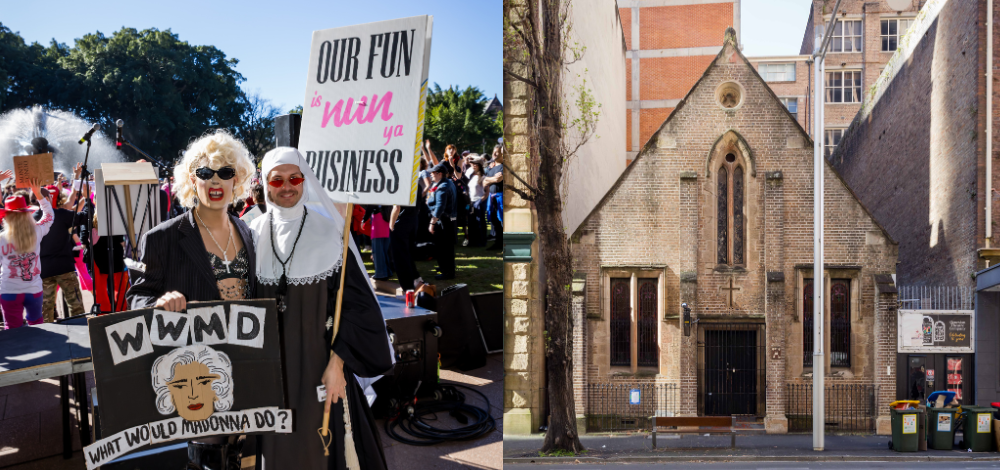
Image: Mark Dickson
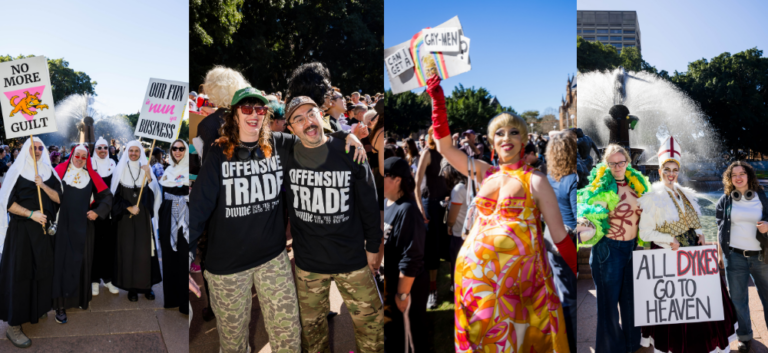
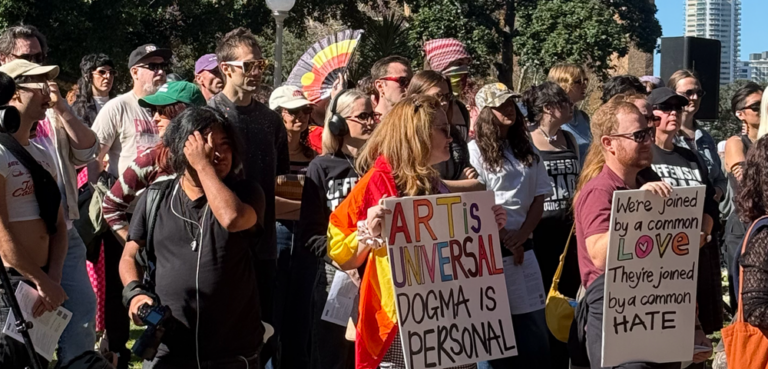
On July 25, Hyde Park sounded like a congregation.
The hymns of Madonna, and thousands of queer people doing what we’ve always done when the world has become a little too heavy: standing together, singing anyway.
Like A Prayer drifted across the park, followed by You’re The Voice, voices laughing and harmonising with complete strangers.
To me, the Divine Playhouse saga proved something beautiful: that the important thing was never a building.
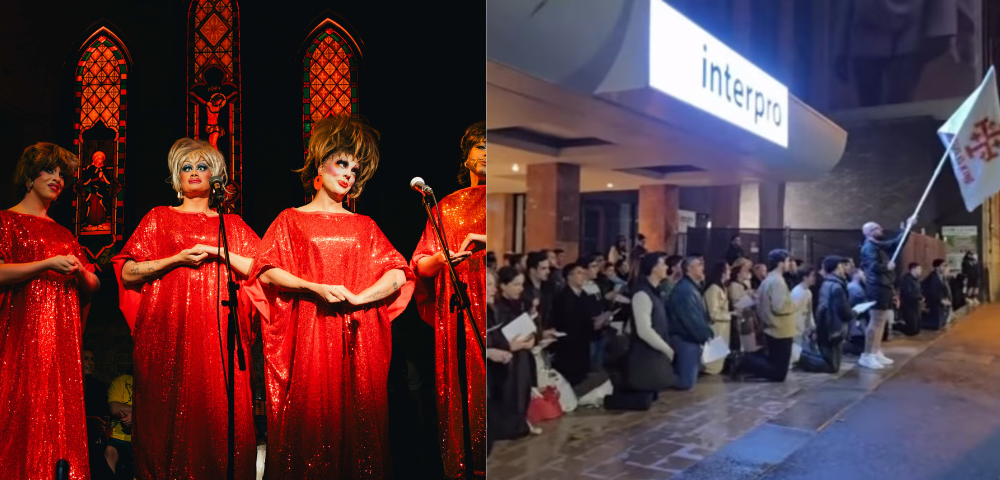
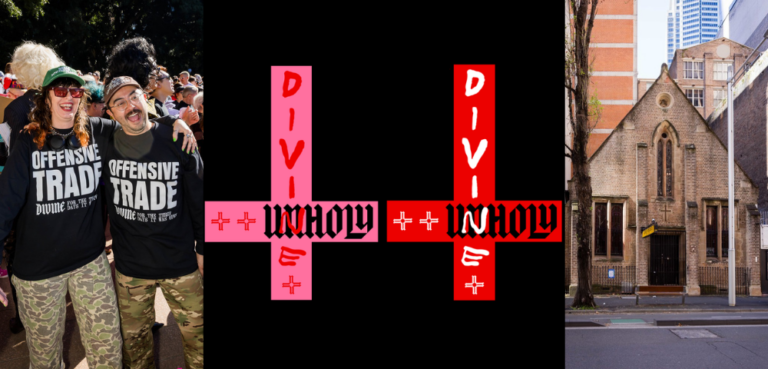
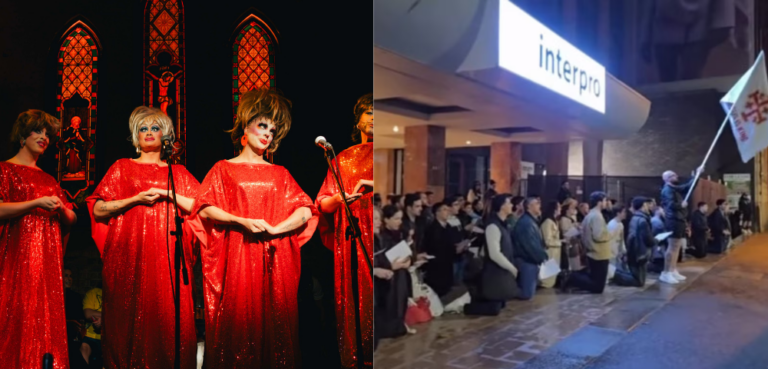
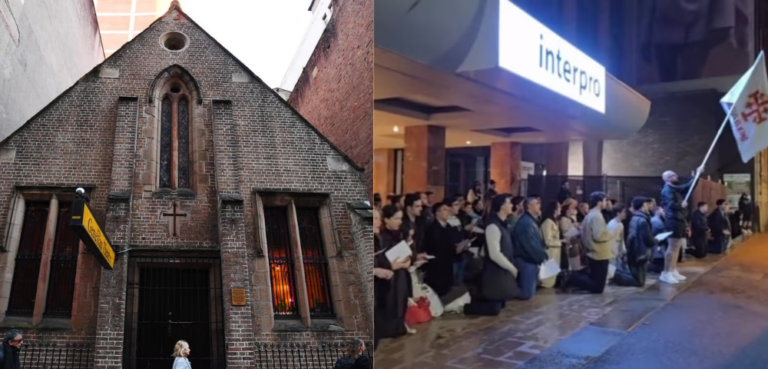
Yes, it occupied a former church that had long since been deconsecrated. Yes, organisers even abandoned its original name, Unholy Playhouse, after concerns were raised by some radical, loud Christian groups, making genuine attempts to find common ground before the doors had even opened.
And yet the protests continued, the pressure mounted, the lease was terminated, and one of Sydney’s most exciting queer arts venues in years vanished after mere days.
A strange thing is that churches are transformed into different things every day around the world. In New York, the Limelight – once an Episcopal church – was famously reborn in the 1980s as one of the city’s most notorious nightclubs. Declining congregations across Europe has seen churches converted into bars and hotels.
Buildings, it turns out, are remarkably adaptable, and once the ground of a church is deconsecrated, it’s just four walls and a steepled roof.
Hell, 420 Kent Street has been the Genesian Theatre since the ‘50s, for Christ’s sake.
The discomfort, then, was never about a church – it was who was inside.
“It was never about the name. It was never about the church. It was never about faith. It was always about us being queer,” Aunty Jonny Hawkins told the crowd.
“Let them keep the building. We don’t need a building to be a community.”
As long as there have been queer artists, they’ve used religious imagery. It is not because faith itself is the enemy (although it can be), but because organised religion has long shaped queer lives through harm, both personal and systemic.
Churches have baptised us and buried us — but they have also been the sites of rejection, shame, sexual assault, and so-called “conversion” practices that have attempted to erase us. At Divine Playhouse, queers had the opportunity to take back the power religion tried to strip away.
Of course artists want to make work about this. We have the right to use imagery of our lived experiences, and the harm that has befallen us, because it is the story of our own survival we’re telling, not that of the religion itself.
Art has always been where people go to wrestle with the stories institutions leave broken.
Drag icon Etcetera Etcetera urged those protesting outside to actually experience the work before condemnation.
“Our show is… a theatrical presentation of our identity,” they said. “It asks questions, provokes thoughts and takes us on an emotional journey.”
The sing-in never felt consumed by anger, despite everything – which we have a Goddamn right to be angry about. We were the bigger people – in the face of hatred, we expressed joy through music.
Our queer venues are beloved and mythologised, but our history has never really been about the physical buildings we’re in – it’s the dancing and singing that matter.
They can keep their four walls and steeple; their long-deconsecrated ground. We don’t need it. As Divine Playhouse founder Kat Dopper said, “they can sing, but we can sing louder.”

Support the Star Observer… while you still can
LGBTQIA+ media is under threat. Queer content is censored by tech conglomerates who amplify bigotry and push out AI slop — so we receive less financial support than ever.
When our community is muzzled and intolerance intensifies, we need queer media more than ever. Your donation means we can continue paying queer journalists to write queer news.
Don’t rely on the straight lies of big tech – support Star Observer instead and donate now.