
GIVE IT TO ME BI: No Script For This
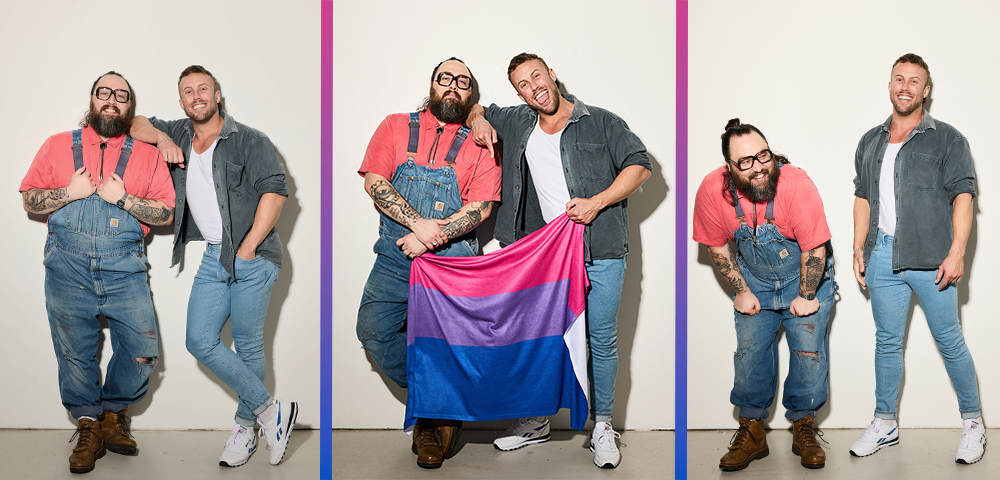
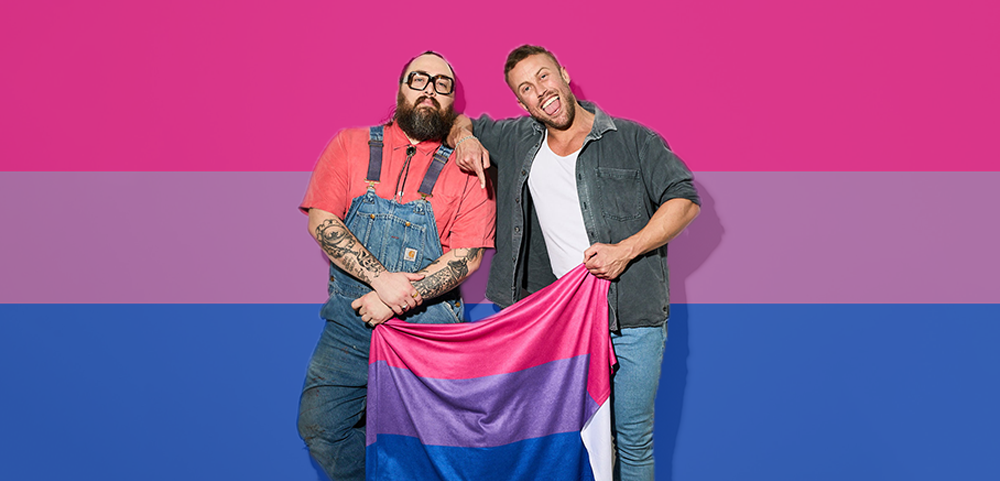
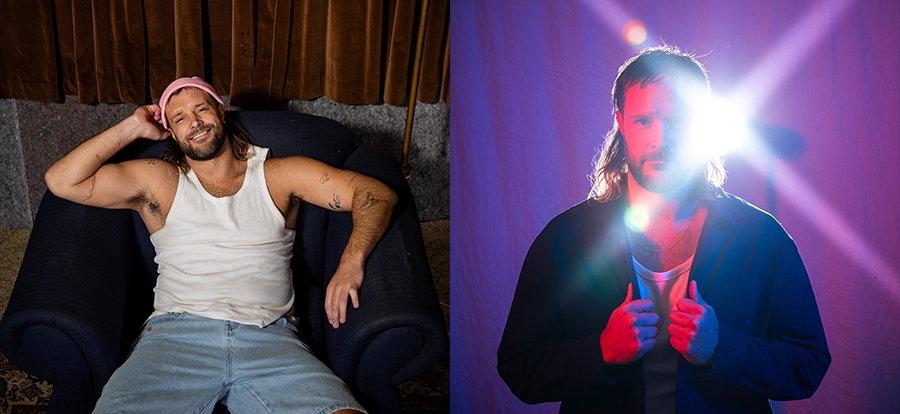
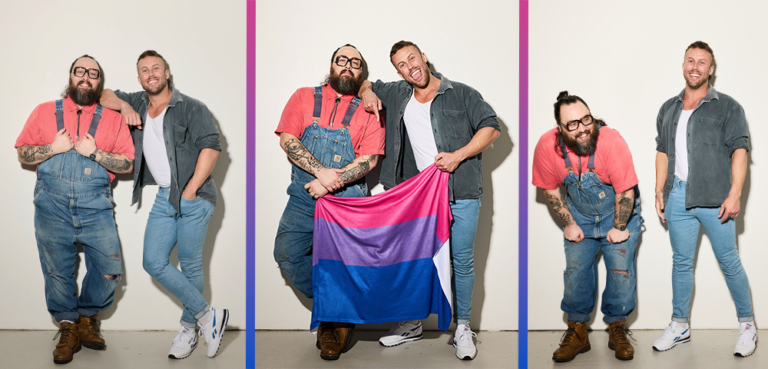
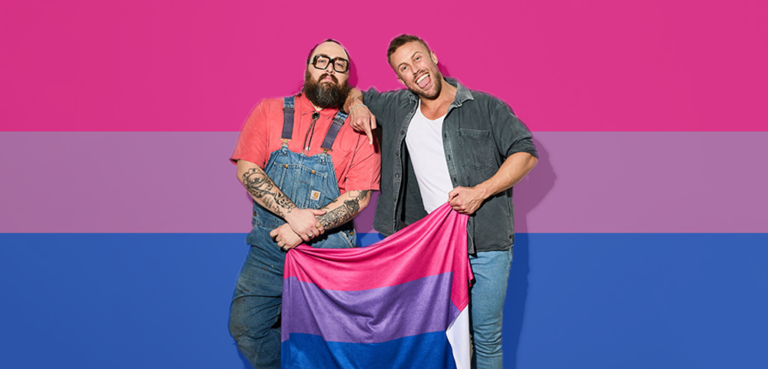
Image: Chad Barnier and Steve Spencer, co-hosts of Give It To Me Bi.
After nearly a year on hiatus, we asked our community what they wanted us to talk about as the podcast returns. From every direction, the same question came back: How do I be bisexual inside a committed relationship?
One listener has been with his girlfriend for four years. A decade ago, he had an experience with a man but never told anyone. He feels in too deep now, scared that bringing it up would only create doubt where there shouldn’t be any.
Someone else wrote: “Since I got engaged, everyone treats me like I’m straight. Friends who knew I was bi suddenly only acknowledge me as straight.” Her engagement became a line in the sand where other people stopped recognising who she is.
Most bi+ people never come out, eg. only 1 in 5 men do. That invisibility lets tired stereotypes take root: confused, greedy, incapable of monogamy. Research has debunked them, but the fear hasn’t gone anywhere, especially inside relationships.
You’d think being in a relationship would be protective, but it isn’t always. Australian research found that bi+ people in heterosexual relationships experience worse mental health than their single peers. Yet another reason “heterosexual privilege” is a fiction.
A partner’s acceptance of bisexuality is one of the strongest predictors of relationship satisfaction.
Not tolerance. Acceptance.
I know this because I’ve lived it. The contract of my relationship has always been monogamy. My sexuality means I could potentially be attracted to anyone, but my partner has always been the only one for me.
That doesn’t make me less bi. It makes me bi and in love.
For a long time, bisexuality wasn’t something we’d ever really discussed. I wasn’t in the closet. It just wasn’t part of our conversation until an incidental disclosure over dinner with a friend forced it to be.
What followed was the hardest stretch of our relationship. My partner asked, “Do you not want us to be together?” Inconceivable to me, but a valid question, born from fear and a lack of good information on bisexuality that turned my disclosure into doubt and “what ifs.”
Giving my partner time to understand, ask questions, and always affirming that our relationship was my priority, gave her renewed confidence in us. And connecting with the bi+ community and engaging in advocacy work was exactly what I needed for my identity. My partner became an incredible ally, not only of me, but of our community widely.
Bi+ people often partner with someone who has a different sexuality to them. That means there’s no shorthand and bi+ folks often have to educate their partners.
This is an opportunity, an invitation for you and your partner to build a relationship specifically tailored for people inside it. There are no rules except the ones you make together, and as long as both people feel respected and seen and committed to evolving together, that’s more than enough.
Your relationship doesn’t cancel your identity. Your monogamy doesn’t shrink it. And your silence doesn’t protect it.
We’re going to spend real time with this on the podcast because it deserves more than a short column. But for now, know this. You didn’t stop being bi when you fell in love. And you don’t have to choose between your identity and your relationship.
You can hold both. You already are.

Support the Star Observer… while you still can
LGBTQIA+ media is under threat. Queer content is censored by tech conglomerates who amplify bigotry and push out AI slop — so we receive less financial support than ever.
When our community is muzzled and intolerance intensifies, we need queer media more than ever. Your donation means we can continue paying queer journalists to write queer news.
Don’t rely on the straight lies of big tech – support Star Observer instead and donate now.