
GIVE IT TO ME BI: Rejecting Labels Is Valid, But What If It’s Costing You?
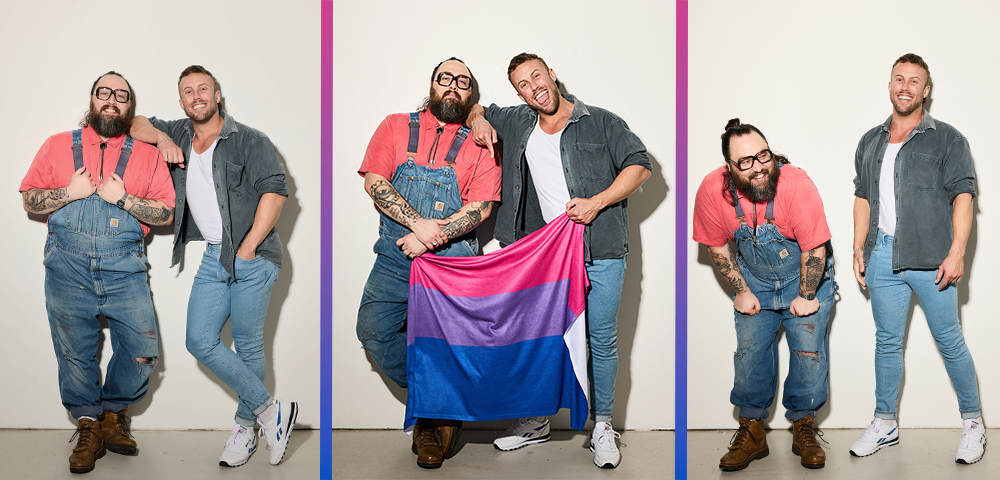
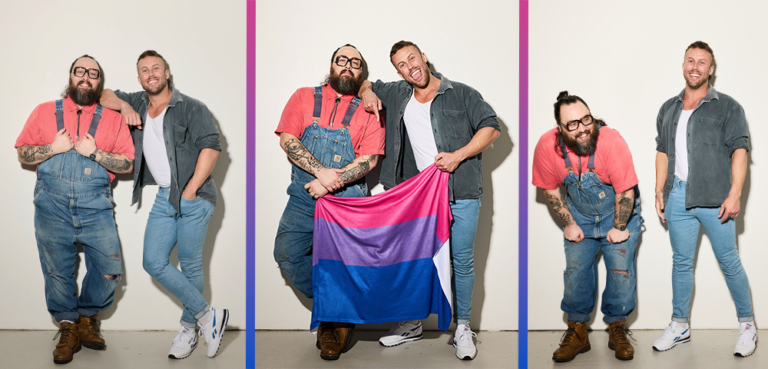
Image: Chad Barnier and Steve Spencer, co-hosts of Give It To Me Bi.
You’re at the doctor, a form asks about your sexuality, and you pause. You know you’re attracted to more than one gender. You’ve known for years. But none of the words on the form feel quite right.
“Bisexual” isn’t how you describe yourself.
“Pansexual” doesn’t quite land either.
Our listener Brian told us he’d sometimes use the word “queer,” which was “accurate, but didn’t fully reflect what I felt inside.”
You leave the field blank.
Nobody notices. Your visit carries on. But here’s what you don’t see. That blank field is a tiny act of disappearance. And multiplied across thousands of forms, surveys, and studies, it becomes something much bigger: an entire community, rendered invisible to the systems designed to serve it.
The bi+ community has more ways of describing attraction than any other group. And plenty of us use none of them. Because no one’s sexuality should be squeezed into a word that doesn’t honour its complexity. Or maybe you just can’t be bothered with labels. Also valid!
This wonderful diversity inherent to our community is also one of our biggest challenges. It makes us impossible to count. Labels are currency. They’re how researchers find us and how governments decide who gets funded.
Bi+ people are the largest group within Australia’s LGBTQ+ population. And the one with the worst health outcomes, yet we receive less than one percent of LGBTQ+ funding. The data to prove the true scale of our community’s needs barely exists.
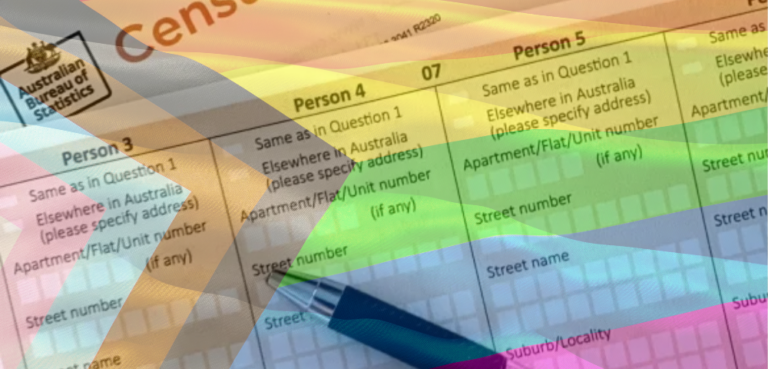
This year, the Census will include a question on sexuality for the first time in Australian history. It’s a moment our communities fought hard to win. But it only works if people show up in the data.
We know the census is imperfect, but here’s some hope: bi+ advocates and researchers are leading groundbreaking work to ensure every corner of our community is represented. The recent BiSHH study was so inclusive that many participants reported feeling truly seen for the first time. Myself included.
That research – and the services that will grow from it – depends on funding. And funding flows from the data the census collects. The post-label dream is beautiful. The under-resourced reality isn’t.
In the 2020 US Census, nearly half of all Latino respondents left the race question blank or selected ‘some other race’ because no box fit their identity. Community organisations mobilised around “check the box” campaigns while simultaneously debating which boxes should exist, and the form was eventually redesigned. Progress is often messy.
So we’re not asking you to change how you identify. We’d never ask you to collapse that richness into one checkbox. But this year when the census asks, consider ticking “bisexual.” At its most basic, the word simply means attraction to more than one gender. It doesn’t have to be your everyday word.
The census isn’t asking you to be something. It’s asking you to be counted.
A label doesn’t have to define you to defend you.
You can tick that box and still call yourself whatever feels right the rest of the time. One doesn’t cancel the other.
However you identify, your experience is real. Your attraction is valid. You don’t owe anyone a label.But you DO deserve to be counted.
Support the Star Observer… while you still can
LGBTQIA+ media is under threat. Queer content is censored by tech conglomerates who amplify bigotry and push out AI slop — so we receive less financial support than ever.
When our community is muzzled and intolerance intensifies, we need queer media more than ever. Your donation means we can continue paying queer journalists to write queer news.
Don’t rely on the straight lies of big tech – support Star Observer instead and donate now.