



EXPLAINER: Searches For The 2026 Census Are Booming — And This Year, LGBTQ+ People Will Be Counted

Image: ABS / AAP
If your Google searches lately have included some variation of “when is the Census?”, “do I actually have to do the Census?” or, perhaps most importantly, “what happens if I simply pretend the Census does not exist?”, you are very much not alone.
Star Observer has delved into Google Trends to see what this year’s response is to the Census, and what we’re all searching for regarding it. And it’s pretty significant – search interest has absolutely shot up over the past month as next week’s Census night approaches.
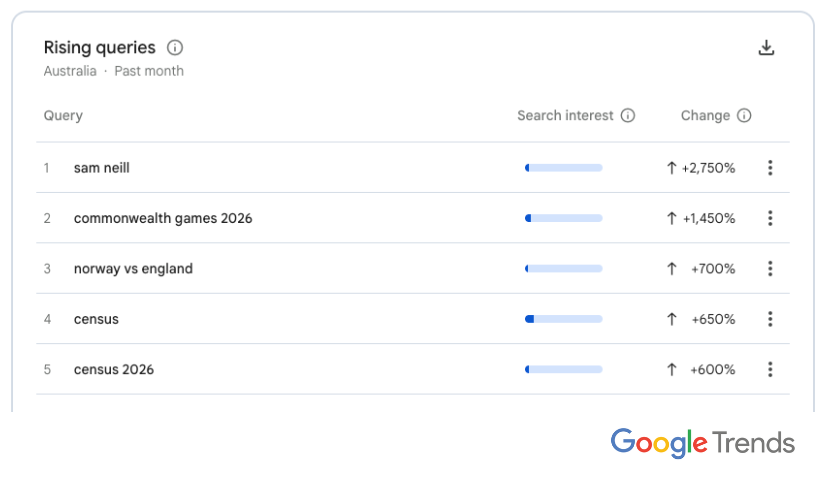
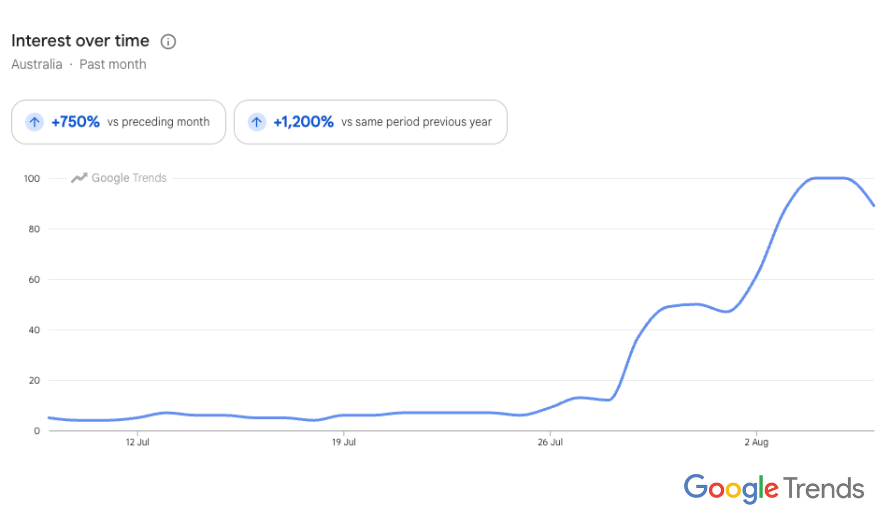 And over the last month,“census” and “census 2026” are currently the fourth and fifth fastest-rising search queries in Australia respectively.
But the 2026 Census is also a particularly important one for LGBTQ+ Australians. For the first time in the history of the Australian Census, people will be asked questions specifically designed to collect data about sexual orientation and gender identity, to get more accurate information about how many of us gay, lesbian, bi, trans, and gender-diverse folks we have here in this beautiful country.
So, with Australia apparently furiously Googling what the hell we’re meant to be doing next week, Star Observer has put together this handy dandy Census explainer.
When is the 2026 Australian Census, and how do I do it?
Census night is Tuesday, August 11, 2026, but you don’t actually have to wait until Tuesday night and sit down with the entire household like you’re completing some strange national group assignment.
Most households will receive a letter containing a Census number and temporary password, which can be used to complete the form online. Paper forms are also available, and in some areas — including places where internet or postal access may be more difficult — forms will be delivered directly or Census staff will visit households.
Emily Walter, Census national spokesperson, said instructions would begin arriving in mailboxes in the weeks leading up to Census night – yours is likely already in your mailbox.
“Census instructions will start arriving in mailboxes over the coming weeks, so we’re asking households to check their mail,” Walter said in a statement on July 28.
“Once you receive your instructions, you can complete your Census straight away if you already know where you’ll be on Census night. You don’t need to wait until 11 August.”
The Australian Bureau of Statistics expects around 85 per cent of Census forms to be completed online this year, with the average household taking around 30 minutes to finish it.
Some households will instead receive a paper form in the mail or from a Census field officer, although they can still switch to the online version if they’d prefer.
Why is the 2026 Census such a big deal for LGBTQ+ Australians?
To put it plainly – it has been a long time comin’.
For the first time, Australians aged 16 and over will be asked two new questions about gender and sexual orientation. The Census will also ask about sex recorded at birth, meaning the ABS will be able to use the sex-at-birth and gender responses together to produce data about cisgender, transgender and gender diverse Australians.
The gender question asks: “What is the person’s gender?” Respondents can select Man, Woman or Non-binary, specify another term, or choose “Prefer not to answer”.
The, the sexual orientation question asks: “How does the person describe their sexual orientation?” Options include Straight, Gay or Lesbian, Bisexual, another term which can be entered manually, “Don’t know”, or “Prefer not to answer”. Free-text responses can be coded into categories including pansexual, asexual and queer.
And it is worth remembering that we very nearly didn’t get these questions at all.
In 2024, the Albanese Government initially decided not to proceed with new LGBTQ+ Census questions amid concerns they could create a “divisive” political debate. After a fairly spectacular backlash from LGBTQIA+ organisations, advocates and Labor MPs themselves, the government reversed course and confirmed gender and sexual orientation would be included.
One glaring omission remains: there is no specific question about variations of sex characteristics or intersex status. The ABS had considered the topic, but said testing showed it could not collect sufficiently high-quality data because of its “technical complexity”.
It means this Census is an enormous step forward for LGBTQ+ data in Australia, but it still won’t give us the complete picture of our communities – but it’s a step in the right direction, as long as we dont rest on our laurels from here on out, and keep fighting for the inclusion of intersex folks and anyone else the Census questions don’t quite cover.
What if I’m not out to the people I live with?
It’s important to remember that while we’ve celebrated many wins for the progress of our community, for many people it can still be difficult– and for some, dangerous – to come out publicly.
The standard practice is for one person to fill out the Census form on behalf of everyone in their household. But obviously, when you’re suddenly asking about sexuality and gender, that creates a pretty significant privacy problem for people who aren’t out to their family, or housemates.
But there is a way to be counted, without outing yourself.
You can request a separate Census form and complete your answers privately instead. The ABS specifically points this option out alongside the new sexual orientation question, and says separate forms are available for people who want to keep their responses private from others in their household.
To do this, call the Census Contact Centre at 1800 181 227 to request your own personal access code or paper form.
Your Census information is confidential, and the ABS says information capable of identifying any of us won’t be shared with other government departments or direct marketing companies.
What is the Australian Census actually used for?
Getting decent LGBTQIA+ data matters beyond simply being able to point at a spreadsheet and say: see, we’re here.
The Census is Australia’s biggest statistical collection, essentially taking a snapshot of who lives here, where we live, how old we are, what our households look like, what work we do, what languages we speak and a whole pile of other information – now including how we identify, and who we love.
That data helps determine how billions of dollars in government funding is distributed and informs decisions about schools, hospitals, roads, aged care, community services, infrastructure and electoral boundaries.
For LGBTQIA+ communities, having reliable national data about sexuality and gender can help governments and organisations understand where we are and what services our communities actually need.
We’ve spent decades trying to make policy for populations that the country’s largest dataset effectively couldn’t see. Counting us properly won’t magically fix inequality, obviously, but it does make it much harder to pretend we aren’t there.
Is the 2026 Census compulsory?
Yep, sure is.
Completing the Census is compulsory under the Census and Statistics Act 1905. The exception is the question about religious beliefs, which you are legally allowed to leave unanswered.
And now, with the new LGBTQ+ questions: the form explicitly gives you a “Prefer not to answer” option for gender and sexual orientation, too.
The Census covers people who are in Australia on Census night, including visitors and temporary residents.
What happens if you don’t do the Census?
No, the ABS does not immediately kick down your front door because you forgot about the Census.
If you don’t submit a form, the ABS says it will first contact you and encourage you to complete it. If you continue not to respond, you can be formally served with a written direction requiring you to complete the Census.
Ignoring that direction is where things become… considerably less chill.
Under the Census and Statistics Act, if you still refuse after being issued a formal written direction, you can face prosecution and fines of up to $364 per day. Knowingly supplying materially false or misleading information is also an offence.
So yes, you do have to do it. And yes, it can be kinda boring.
But think of it this way – it’s something our community has fought for for generations, because as tax-paying members of Aussie society, we damn well deserve to be counted. So it will only take you about half an hour – and you get to be part of our country’s queer history forever.

Support the Star Observer… while you still can
LGBTQIA+ media is under threat. Queer content is censored by tech conglomerates who amplify bigotry and push out AI slop — so we receive less financial support than ever.
When our community is muzzled and intolerance intensifies, we need queer media more than ever. Your donation means we can continue paying queer journalists to write queer news.
Don’t rely on the straight lies of big tech – support Star Observer instead and donate now.




Leave a Reply