
Radio Caller Claims Huge Savings by Choosing Non-Binary on Car Insurance
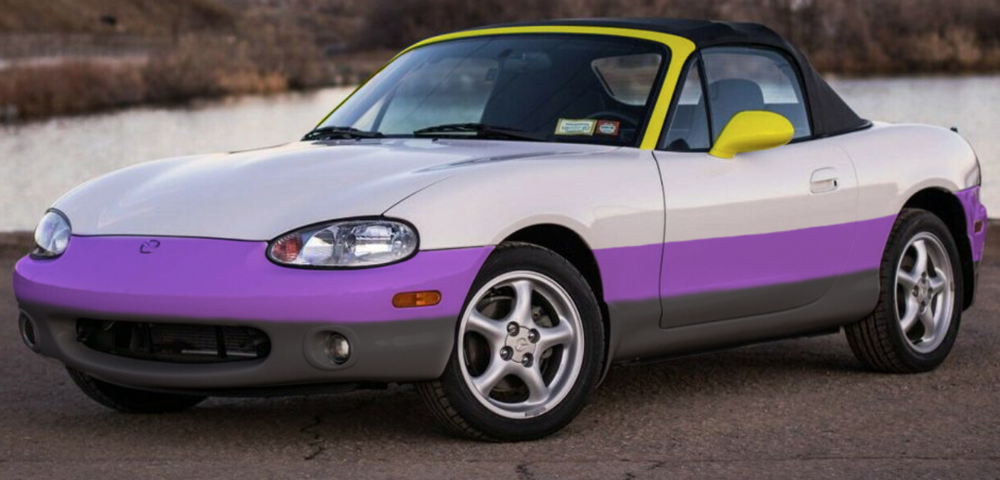
Image: Image: Facebook
A Sydney radio caller believes he’s found a way to knock dollar signs off his car insurance, but not by driving more safely, but by changing your gender to non-binary.
“I found the box on there and thought I’m just going to give it a tick and see what it comes out with, it might be a bit of a joke,” said Ben, a guest on the radio show, 2GB Sydney. When the quote came back, he claimed the price had dropped by $800 after he chose the gender-neutral option on NRMA.
The guest’s quote from NRMA decreased from a male’s quote of $ 2,700 to a non-binary individual’s quote of $1,900.
When non-binary identity becomes a discount
For conservative radio, it was a sarcastic money saving tip. For non-binary people, their identity was reduced to a discount.
“The best deal goes to the non-binary driver … just tick the non-binary box, because no-one is going to be able to disprove how you identify, you’re going to get a better deal,” said 2GB Host, Ben Fordham.
A follow-up test was conducted by News.com.au using the National Roads and Motorists’ Association (NRMA) insurance company, as they had recently added the option. The test used three quotes for the same middle-aged Sydney driver in an electric Kia EV3, with every detail identical except the gender marker.
A male driver was quoted the highest amount at $2,236, a female driver at $2,061, and a non-binary driver at $1,955.
“We consider a number of factors when determining the premium for car insurance, including the gender of the driver, make and model of your vehicle and claims history,” said an NRMA spokesperson. “We will continue to refine our approach as we gain insight on driver behaviour to ensure policies and premiums are reflected appropriately. It’s important customers provide accurate information when purchasing insurance.”
Research from UNSW in 2021 found that men are up to twice as likely to be involved in car crashes. However, women are more likely to need hospital care after an accident.
Similar quotes have also been reported from another major insurer, Allianz, after the same caller said his premium decreased when he selected non-binary instead of male. His price dropped from $2,800 to $2,300.
However, beyond those examples, there’s no indication that this is a universal bargain. Gender-based pricing varies between companies, and limited research so far shows that trans and non-binary drivers don’t consistently get cheaper quotes.
Gender netural options are not always available or beneficial
Not every insurer even offers a non-binary box. AAMI only allows customers to select male or female, but says it will review its system. Its website suggests that users select the gender they feel most comfortable with, then call once they have a quote or policy number so the company can record their correct gender for future system updates.
Gender-based pricing is not rare in car insurance, and the limited data available suggests non-binary and transgender drivers don’t always benefit. One US analysis report found that, for the same policy, male drivers were quoted $53 a month, non-binary drivers $55, and women $57, putting the non-binary quote in the middle rather than at the bottom of the scale.
Advocates have also reported cases where transgender individuals’ premiums increased when they transitioned.
Data needs to be updated
Experts have also contributed to the discussion, noting that a significant part of the problem is that most road safety statistics still categorize drivers as only male or female, disregarding the LGBTQIA+ community.
The Australian Road Deaths Database records victims as male, female, or, in rare cases, “unknown.” Currently, only 32 out of nearly 58,000 deaths since 1992 are labeled as unknown.
“Because current data is generally limited to binary notions of sex, there is a critical need for more nuanced research that investigates the gendered dimensions of mobility, transport and safety,” said Professor Rebecca Ivers, Head of the UNSW School of Population Health, to News.com.au.