


EXPLAINER: Laws Protecting LGBTQIA+ People Exist Around Australia – SA Lags Behind
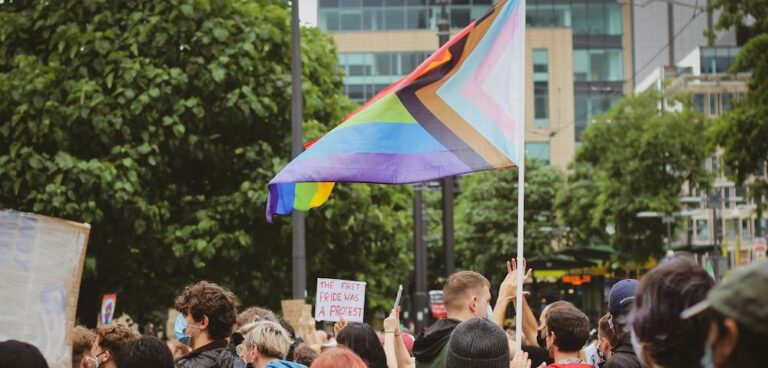
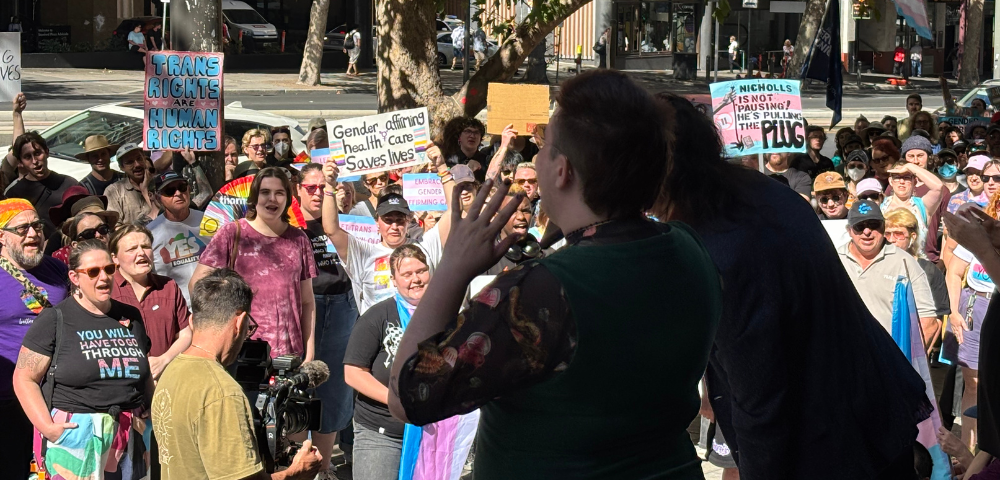
Violence against the LGBTQIA+ community is on the rise in Australia. But in the lead-up to the South Australian elections, LGBTQIA+ people are left unprotected.
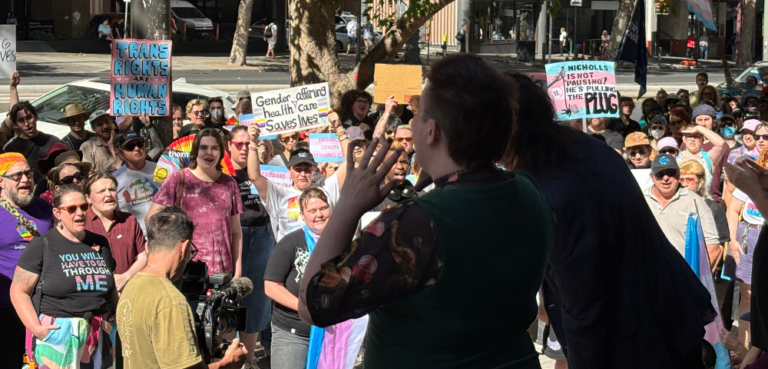
The news recently has been full of responses to a rise in anti-LGBTQIA+ hate crimes, with NSW rolling out new legislation which toughen penalties for publicly threatening or inciting violence on the grounds of a protected attribute such as sexual orientation or gender identity.
Victoria is the latest state to bring in anti-vilification laws to protect the LGBTQIA+ community from hate speech, expanding the state’s laws to protect people if they are vilified based on disability, gender identity, sex, sex characteristics or sexual orientation. Victoria joins Tasmania, NSW, Queensland, NT, and the ACT in having some form of anti-vilification for the LGBTQIA+ community, but the specifics vary from state to state.
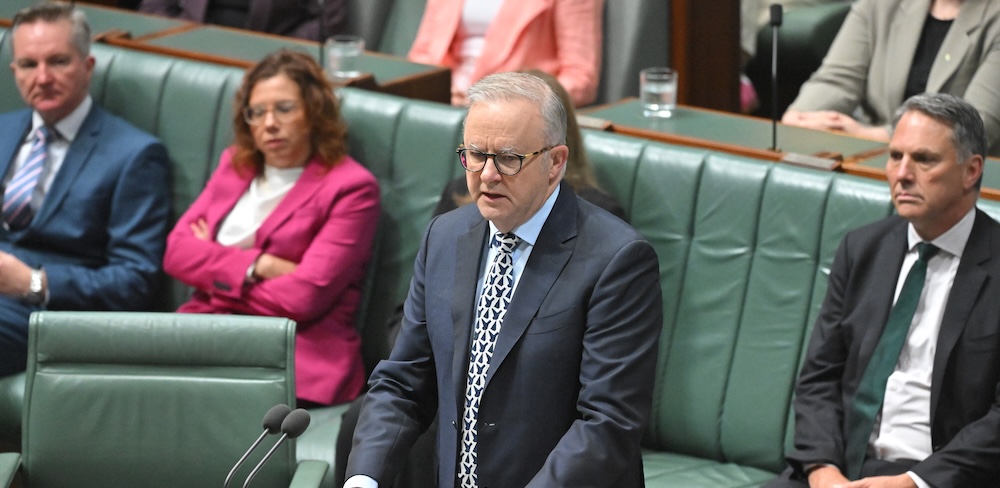
Interestingly, the Albanese government did not include LGBTQIA+ status in their recent federal hate speech laws which were rolled out after the Bondi terrorist attack.
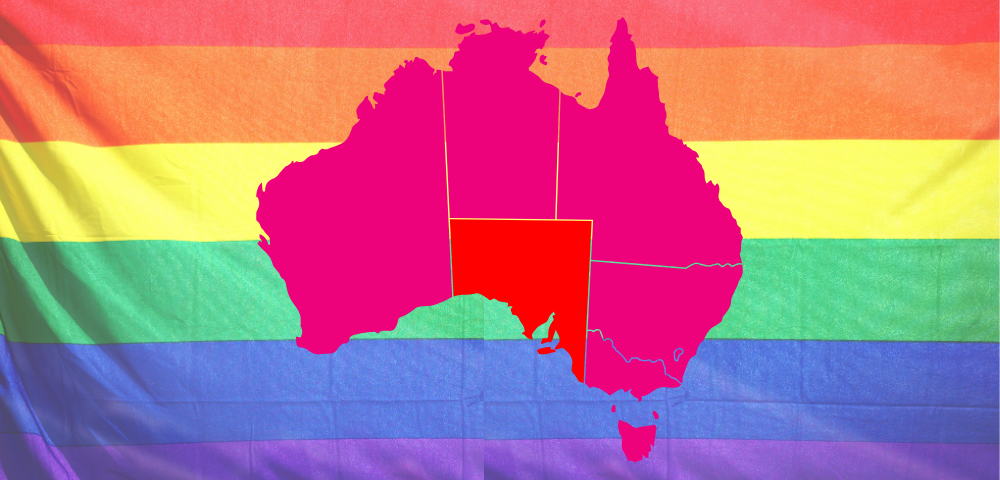
South Australia currently has no anti-vilification laws including the LGBTQIA+ community at all, leaving the state firmly at the back of the pack when it comes to legal protections.
South Australia was once a trailblazer for LGBTIQA+ inclusion, proudly becoming the first state to decriminalise homosexual acts in 1975.
Considering the escalation in hate and violence aimed at queer people recently, establishing these anti-vilification laws in SA is a top priority for advocacy groups – and one that should be considered by SA voters heading into the election this weekend.
“The laws we have at the moment aren’t an adequate protection”
“I think that what we’ve seen over many years, and this goes back decades, is a complacency with the state of our anti-discrimination and anti-vilification laws in South Australia,” says Charlie Hamra, President of the South Australian chapter of Pride in Law.
South Australia currently has The Equal Opportunity Act 1984 (SA), which does not include any vilification provisions, while the Racial Vilification Act 1996 (SA) only covers vilification based on race. “A fair bit has happened since 1984,” Hamra notes.
“There’s two kinds of modernisations that we’re pushing for at the moment, one is to have a full overhaul and review of the anti discrimination framework in South Australia, and the other is to commit to enacting effective laws that protect the LGBTQIA+ community against hate speech and vilification.”
Hamra explains that discrimination and vilification are seen as two different levels of oppression that are faced by minority groups, with the first providing civil protections against being discriminated against in the workplace or when accessing certain services, based on protected characteristics, such as sexuality.
Anti-vilification protections target more extreme conduct, stopping people from inciting hatred, serious contempt, or severe ridicule of a person or group of persons, through criminal offence provisions or civil mechanisms.
“At the moment we don’t have protections beyond racial vilification in South Australia. I will note that our call is to ban the inciting of hatred or intent or ridicule on the grounds of not only sexual orientation, gender identity, intersex status, and HIV status – but also disability and religion, which also aren’t protected in SA,” says Hamra.
“Discrimination against one group hurts us all. It damages the social fabric and protection from vilification should be protection for everyone. Not just elevating one marginalised group above another.”
Not what South Australia stands for
“Legislating anti-vilification laws says that we as a community don’t agree with hate speech. It’s got a norm-setting value,” explains Charlie Hamra. “And I do believe that while we’re being made aware of more instances of people feeling abused, people feeling unsafe, people being disrespected, that’s not what the South Australian community stands for.”
According to the South Australian Rainbow Advocacy Alliance’s (SARAA) State of Pride report, there’s been a “disturbing rise in anti-LGBTIQA+ hate – from violent assaults in Adelaide’s CBD, to rising hate speech and misinformation, and coordinated efforts to exclude trans folk from public life.”
The report shows that LGBTQIA+ South Australians face higher levels of mental ill-health and lower rates of community belonging than those interstate, exacerbated by ongoing experiences of hate, abuse and unfair treatment.
“I was spat on. Rocks were hurled at the building. Objects were shot at the roof. Threats were made against our lives and we were threatened to be sexually assaulted,” says one gay couple who owned a store in regional SA. “At one point, we were threatened with a taser. We received threatening phone calls. Every day felt like a battle just to survive.”
The report shares the experience of a drag performer who since moving to Adelaide was egged, called slurs, and claims to have experience 15 hate crimes in seven months. According to The Advertiser, a transgender lesbian couple had their home attacked three times in two weeks after flying a pride flag.
As reported in Star Observer, a drag storytime in 2024 was protested by a Neo-Nazi group, with a heavy police presence required to keep the library safe from masked men bearing signs saying “PEDO FREAKS”’ and chanting ‘Pedophiles, off our streets’.
“Tackling anti-LGBTIQA+ hate and discrimination requires a coordinated response from government, law enforcement and civil society to stop hate before it escalates into violence,” says SARAA.
“This legislative gap in South Australia’s anti-discrimination and criminal law framework has had real and harmful consequences for LGBTIQA+ people, who are exposed to unchecked public hostility with insufficient legal avenue to challenge the psychological harm inflicted by vilifying statements.”
“A major gap that must be addressed”
Ahead of SA’s state election, only the SA Greens are running with an LGBTIQ+ policy platform, which includes removing religious exemptions to anti-discrimination laws, and implementing a Human Rights Act to protect the rights of all South Australians, including the LGBTIQ+ community.
Responding to SARAA’s questions about election priorities, the SA Labor Party did not flag any commitment to anti-discrimination or anti-vilification laws, while the SA Liberals said that these election asks “such as funding, national clinical standards, and broader anti-discrimination protections are federal responsibilities”.
“The lack of LGBTIQ+ vilification laws in South Australia is a major gap that must be addressed irrespective of who holds office,” said Alastair Lawrie, Director of Policy and Advocacy at the Justice and Equity Centre to Star Observer.
Lawrie, who has written extensively on these laws, notes that civil vilifications laws are not only an important way to address hate speech, but are more likely to be used in practice than more serious hate crimes offences, which are also necessary but will only ever be infrequently prosecuted.
“Above all, LGBTIQ+ vilification laws carry significant normative weight, sending the message that harmful speech against people on the basis of their sexual orientation, gender identity and sex characteristic is worthy of condemnation,” he says.
“Conversely, the absence of LGBTIQ+ vilification prohibitions – with neither South Australian nor Commonwealth law currently protecting our communities – implies that anti-LGBTIQ+ prejudice is not as serious as other types of hate speech.”
“South Australia just last year had big celebrations of 50 years of decriminalisation of male homosexuality,” reminds Charlie Hamra. “We were once a great leader in this area of reform and I’m confident that we can be a leader again. We can catch up to the rest of the pack.”


Support the Star Observer… while you still can
LGBTQIA+ media is under threat. Queer content is censored by tech conglomerates who amplify bigotry and push out AI slop — so we receive less financial support than ever.
When our community is muzzled and intolerance intensifies, we need queer media more than ever. Your donation means we can continue paying queer journalists to write queer news.
Don’t rely on the straight lies of big tech – support Star Observer instead and donate now.


The ALP hates you as much as PHON they just hide it. Expect nothing, you will just be disappointed.