New Zealand’s Parliament has voted to advance a bill seeking to legally define the terms “woman” and “man”, prompting criticism from LGBTQIA+ advocates, legal experts and opposition MPs.
The Legislation (Definitions of Woman and Man) Amendment Bill, introduced by the populist party New Zealand First, passed its first reading this week and will now proceed to select committee scrutiny. The bill proposes defining a woman as “an adult human biological female” and a man as “an adult human biological male” within New Zealand law.
The bill, in the name of New Zealand First MP Jenny Marcroft, passed its first reading in Parliament on Wednesday and will now go through the select committee process.
Marcroft said what it meant to be a woman was “under attack,” and the bill would deliver clarity and consistency. She referenced a ruling by the United Kingdom’s Supreme Court last year, which found the term “woman” refers to “biological sex”.
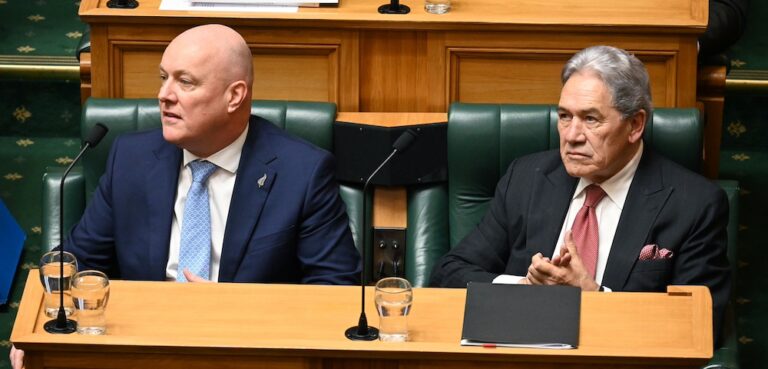
New Zealand First is a right-wing populist New Zealand political party led by Winston Peters that has been criticised for anti-immigration rhetoric, opposition to Māori and transgender rights initiatives, while positioning itself as a nationalist “common sense” party.
In a statement announcing the bill earlier this year, Peters said: “This is not about being anti-anyone or anti-anything. This is about ensuring we as a country focus on the facts of biology and protect the term ‘woman’ in law.”
“This bill would ensure our country moves away from the woke ideology that has crept in over the last few years, undermining the protection, progression and safety of women,” he said. “This bill would ensure our country moves away from the woke ideology that has crept in over the last few years, undermining the protection, progression and safety of women.”
However, critics said the proposed changes could increase discrimination against transgender and gender-diverse people while offering little legal effect.
Legal experts and government officials have questioned whether the legislation would substantially alter existing laws or practices. As reported by Stuff, Barrister Graeme Edgeler said that if the bill passed in its current form, it would have little practical effect.
“Laws you might expect to be affected, for example rules around sex discrimination under the Human Rights Act, just don’t use any of the words the bill actually proposes to define. Nor, for the last 20 years or so, do criminal laws around rape.”
Edgeler noted that the Human Rights Act already permitted sex-segregated facilities and sex-differentiated sports in New Zealand. “But none of these rules have anything do with the definition of man or woman or male or female.”
Opposition parties and community advocates also criticised the bill during parliamentary debate and in public statements.
“Bills like this cause real world harm and we condemn it wholeheartedly,” said Green Party Takatāpui and Rainbow Communities spokesperson Kahurangi Carter.
A Te Pāti Māori spokesperson said it was “legislative erasure of trans people” which “had no place in Aotearoa”.
Pacific community representatives have raised concerns about the impact on transgender Pasifika people and wider community division. Dr Penni Wolfgramm, a clinical psychologist who works closely with Pacific Rainbow communities, said her first reaction to the bill was concern.
Wolfgramm, who proudly identifies as leitī – a Tongan whose gender identity and/or expression is additional or different to their assigned sex at birth – said the bill feels disconnected from Pacific ways of understanding gender.
LGBTQIA+ activist and commentator Shaneel Lal criticised the legislation on social media, writing: “This government has launched another attack on transgender people.b It is becoming increasingly clear that this government has an anti-trans agenda.”
They also warned that anti-trans laws can affect cisgender women, writing:
“In countries overseas where similar laws have emerged, there has been a rise in harassment and attacks against cisgender women who do not fit narrow ideas of femininity. There have been numerous incidents where masculine-presenting cisgender women have been questioned, harassed, or even forcibly removed from women’s bathrooms because someone assumed they were transgender.”
“Many cisgender women do not fit narrow and traditional expectations of femininity. Anti-trans politics places those women at risk too by encouraging people to police who is and is not “woman enough” to exist in public spaces safely. This law does not make women safer.”
The bill’s passage at first reading does not guarantee it will become law. It will now move to a select committee process, where members of the public and advocacy organisations will be able to make submissions before Parliament considers it further.











this will affect mostly cis women, as do all other similar pieces of legislation. dont be fooled this isnt remotely “pro womens rights”. in fact its probably the most anti-women piece of legislation drafted in NZ in quite some time.
Which, of course, is the ultimate goal. They hate trans people but they hate women more. And this is another step to forcing all cis women back into narrow, tightly defined, socially acceptable forms of presentation and behaviour.
Mark my words, this will hurt a great many people far broader than the alleged target.