


Parties, Politics & Protests: Who Is Actually Running The Show At Sydney Mardi Gras?
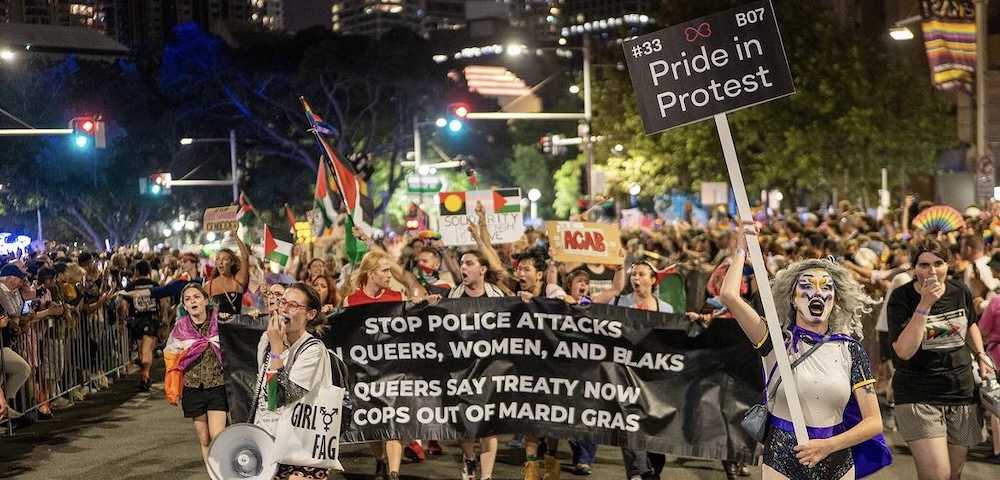
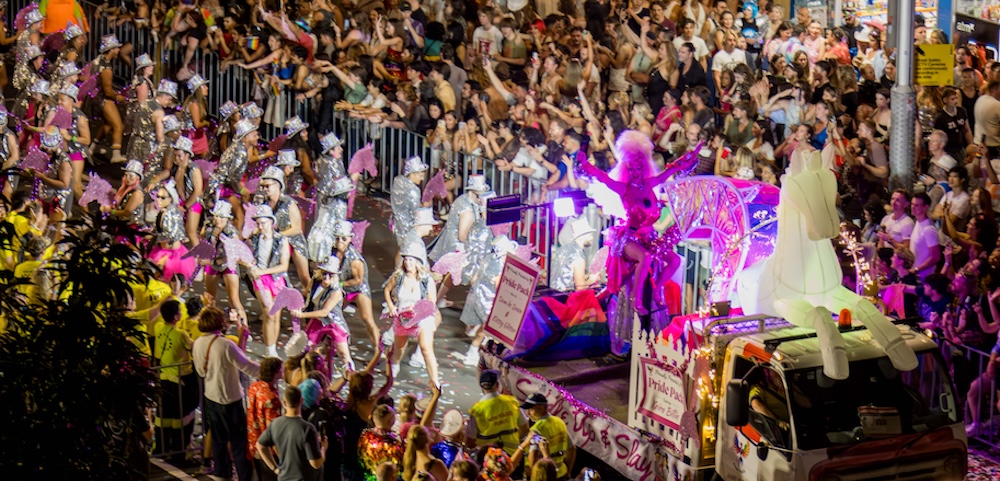
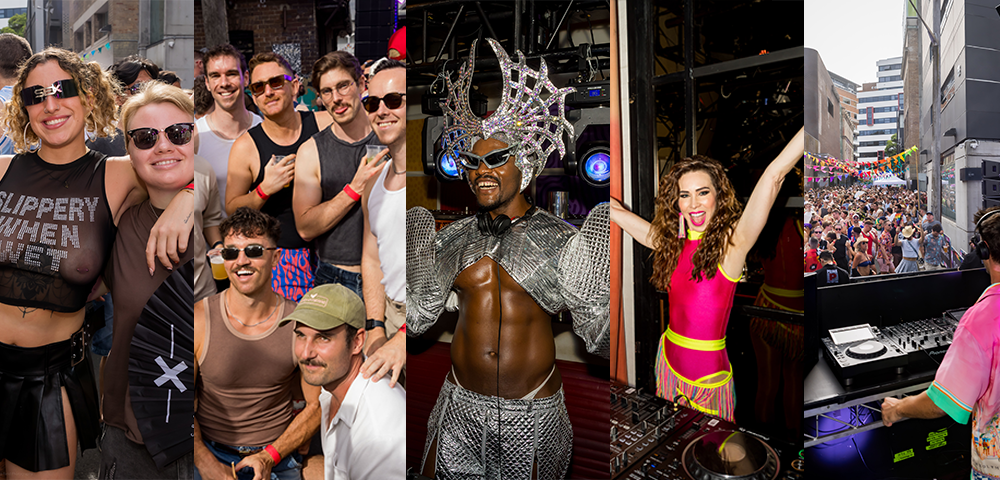
The 2026 Sydney Gay and Lesbian Mardi Gras Parade is over. For most of the [straight] audience, it probably looked like a fun, glitter-filled celebration. Ecastica!
But under the shiny rainbow facade, everyone involved seems to agree that there are deep tensions and a ‘fight for the future of Mardi Gras’. Regularly, these tensions flare up over questions on police, refugee rights, and pinkwashing.
This year, the tensions felt heightened. There’s been censure motions of directors, accusations of transphobia, and calls for government funding to be withdrawn. In dramatic fashion, the night before the parade, the Mardi Gras CEO banned queer activist group Pride in Protest (of which I’m a member) from marching in the parade over posts on Palestine, Zionism and whether certain organisations are supporting genocide. It was a move reminiscent of the [fatal] decision by Adelaide Writers Festival to drop Palestinian writer Randa Abdel Fattah. Last week, the organisation stood down all the board directors affiliated with Pride in Protest and the queers for Palestine campaign.
While these moves against grassroots activists are unjustified, the tensions they reflect are natural. The queer community is not, and has never been, monolithic. Yet queer resistance formed through a shared solidarity. That solidarity was constructed when all forms of queerness were rejected and othered. Today, that solidarity is fracturing as strides towards equality are unequally distributed among the letters of our acronyms.
All the coverage and analysis of how Sydney Mardi Gras deals with these tensions is missing something really important – a genuine power analysis.
Pride in Protest is no doubt an influential and visible activist collective (hello 18k Instagram followers), and support for our positions is growing. We are one force trying to pull Mardi Gras in a certain direction – one that centres activism and builds solidarity with movements challenging patriarchy, white supremacy and inequality.
But there are HEAPS of other forces. Many aren’t so visible. And, on my reading, the forces pushing Mardi Gras towards depoliticisation, commercialisation and palatability are the ones winning.
So who are the other, less visible, major players? Corporate sponsors obviously give millions of dollars to Mardi Gras. So does the City of Sydney Council. Inner West Council provides Mardi Gras with workshop spaces for float building. Destination NSW is a major sponsor, the NSW Police determine how much Mardi Gras needs to cough up for user-pay policing of their events, and Transport NSW decides when and how to run public transport on the night.
Any one of the groups could threaten to pull their funding, support or cooperation unless certain conditions are met. When budgets are tight, and one problem could plunge the festival into a deficit, these threats create huge leverage and power.
But the willingness to use this leverage varies tremendously across the political spectrum.
The political right has shown they are absolutely willing to threaten funding for political ends. Big corporations will surely flee as soon as Mardi Gras’ particular form of pinkwashing is no longer increasing profits. But left-wing and progressive powers follow a very different calculus.
Progressives understand the value of Mardi Gras – for representation, for visibility and the advancement of LGBTQIA+ rights. They (rightly) don’t want to threaten funding for Mardi Gras and undermine these good things.
We’re therefore left with a scenario where, of all the ‘unseen’ forces in Mardi Gras, it is only those who want a commercialised and depoliticised pride (and maybe an explicitly zionist pride) that are using any of their potential power to influence the organisation.
Where does this power imbalance leave us? What happens when a sponsor decides that trans rights aren’t as good for their branding as the acceptable white gay couple from Darlinghurst, so they ensure that none of their money goes towards trans-led events? Or when they will only pay hundreds of thousands of dollars for the prime signage spot if Mardi Gras guarantees that the sex worker float can’t walk past it.
These questions aren’t hypothetical. While I’m no longer in the room where these decisions are made, I’m sure the CEO’s decision to ban the Queers for Palestine float didn’t come out of nowhere. Whether it came from sponsors, government partners or somewhere else, barring anti-genocide campaigners from Mardi Gras is the result of conservative pressure.
Following the ban, the organisation is doubling down on its decision (it’s giving days 1- 4 of the Adelaide Writers Festival scandal). Apparently, talking about Palestine is harassment, disagreeing with a powerful CEO is bullying and anyone who has said anything supportive is a red-under-the-bed sleeper agent orchestrated by Pride in Protest.
The company’s comms aren’t that sophisticated – they simultaneously try to position Pride in Protest as a fringe and irrelevant grouping and also as all-powerful and sinister, primed to topple an almost 50-year institution.
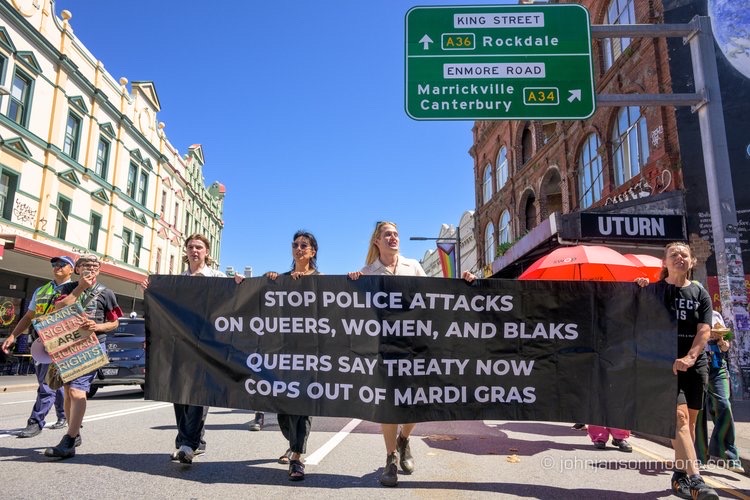
But let’s zoom out a little. This really isn’t all about Pride in Protest. While our group has lots of supporters, no one is so deluded as to think every Sydney gay is ready to back police abolition. But I do think the majority of our community wants a political Mardi Gras. A Mardi Gras that uses its platform to advocate for law reform, to pressure our governments to do better and yes, one that stands up against genocide.
So I think it’s time for the broader left and progressives to start throwing around their weight.
I can’t help but wonder, is Clover Moore really comfortable with her council acting as a silent partner to an organisation that bans floats for having the same messaging that she marched across the Harbour Bridge to support? Surely progressive councils like Sydney can do more than sit on the sidelines while they watch Mardi Gras get co-opted.
While I am in no way advocating for all progressives to pull funding from Mardi Gras, there is a need to challenge the one-sided power dynamics of sponsorship. The invisible powers behind Mardi Gras can paint one particularly vocal activist collective however they want – they can’t do that to all the progressive forces in Sydney.
It’s time for proponents of queer rights, particularly those with some leverage, to start playing a more active role in counteracting the conservatism and pinkwashing. It’s up to everyone – not just the most active and radical queer collectives – to ensure that Mardi Gras maintains its place at the intersection of partying, politics and protest.
Luc Velez (he/him) is a queer activist, member of Pride in Protest and a former board director of Sydney Gay and Lesbian Mardi Gras.

Leave a Reply