
Queensland’s Healthcare Crisis: When Politics Trumps Evidence
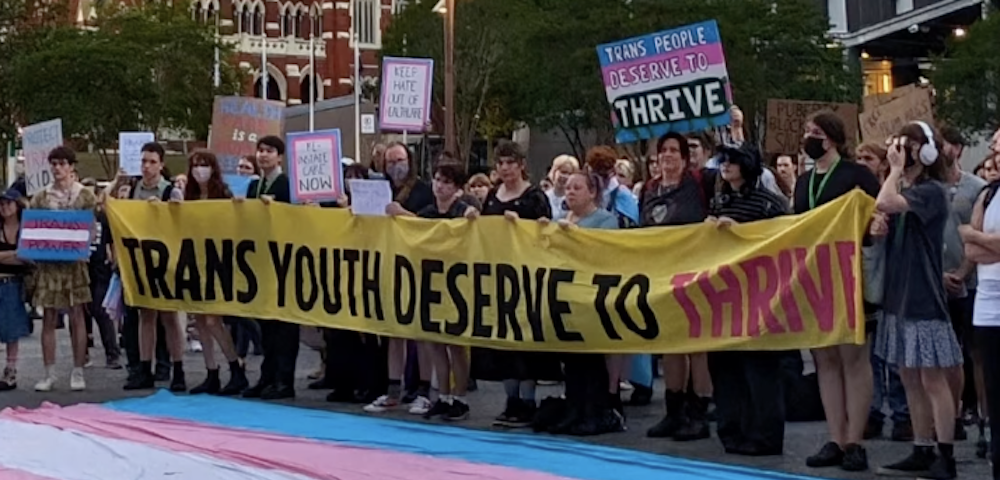
Image: transjusticeau/Instagram
Six months ago, Queensland Health’s own experts delivered an unequivocal verdict: the Queensland Children’s Gender Service provides “safe, evidence-based care consistent with national and international guidelines.” There was no evidence of coercion. No evidence of rushed treatment. Just comprehensive, careful clinical practice helping some of our state’s most vulnerable young people.
Today, those same young people are locked out of potentially life-saving healthcare—not because new evidence emerged, but because the government changed.
The timeline tells the story
In July 2024, an independent seven-person expert panel spent six months examining every aspect of Queensland’s gender service. They found 547 young people receiving careful, evidence-based care through comprehensive multidisciplinary assessment. The government responded by announcing a $2.6 million funding increase.
In January 2025, just six months later, with no new Australian clinical evidence, the new LNP government banned new patients under 18 from accessing this care. Their justification? International political decisions, not Queensland clinical data.
When the Brisbane Supreme Court ruled the ban unlawful in October due to a lack of consultation, Health Minister Tim Nicholls simply issued a new directive reinstating it the same day.
What the evidence actually shows
Australian research tells a clear story. The world’s most extensive longitudinal study of transgender youth (630 participants followed over 20 years) demonstrates significant mental health benefits and safety. Recent Australian research from over 1,500 trans young people shows medical affirmation is associated with significantly better mental health outcomes.
In September 2024, after international restrictions were lifted, an independent NSW government review found puberty blockers “safe, effective and reversible,” directly supporting Queensland’s own clinical findings.
Yet the evidence cited to justify restrictions shows a troubling pattern. Independent analysis found the Cass Review’s systematic reviews demonstrated a high risk of bias. The McMaster reviews used to support restrictions were funded by an organisation designated as an anti-LBGTQ+ hate group, with authors receiving financial compensation from that advocacy group.
Even more damning: Dr Gordon Guyatt, the developer of the evidence standards used and a named author on those reviews, publicly stated that banning care based on their findings violates evidence-based medicine principles.
The suicide prevention question
Here’s what should make every Queenslander pause: research shows access to puberty blockers is associated with a 70% reduction in lifetime suicidal ideation among trans youth.
Let that sink in! A 70% reduction.
Trans youth already face a 38% suicidal ideation rate—nearly eight times the general population. Australian research consistently shows that without access to affirming care, these young people experience:
- 50% depression diagnosis rates (vs. ~5% general population)
- Multiple emergency department presentations for mental health crises
- Psychiatric admissions
- Self-harm requiring medical intervention
Queensland’s own suicide prevention plan, Every Life, commits to “targeted approaches for over-represented population groups” using “evidence-based practice.” Yet we’re denying evidence-based suicide prevention intervention to one of the most at-risk populations.
This isn’t a neutral “wait and see” approach. Forcing trans youth through unwanted puberty causes documented severe psychological distress. We’re not choosing between treatment and nothing—we’re choosing between puberty blockers and the wrong puberty, with all its irreversible changes and mental health consequences.
The real cost
Economic analysis shows gender-affirming care saves $3-7 per dollar invested through prevention of mental health crises. For Queensland’s current patient population, we’re looking at potential health system savings of $59 million over four years.
But the human cost cannot be calculated in dollars. Every emergency department presentation, every psychiatric admission, every family in crisis represents a young person in distress—distress that evidence shows could have been prevented.
Queensland’s own contradictions
The bitter irony? Queensland’s ban contradicts the state’s own policy frameworks:
Queensland Health’s Strategic Plan commits to “equity of access” and “safe and quality patient care.”
The Human Rights Act 2019 protects the right to health services without discrimination and the protection of children in accordance with their best interests.
Every Life: The Queensland Suicide Prevention Plan commits to “targeted approaches for over-represented population groups” using “evidence-based practice.”
Yet here we are, denying evidence-based suicide prevention intervention to one of the most at-risk populations, based on political ideology rather than clinical evidence.
What needs to happen
The Vine Review report is due imminently. Whether the government releases it will tell us everything about their commitment to transparency and evidence-based policymaking.
But we already know what the evidence shows. Queensland should:
- Reverse the ban immediately no new clinical evidence justifies it
- Implement the 25 recommendations from the July 2024 evaluation
- Restore the $2.6 million funding increase for service expansion
- Commit publicly to evidence-based healthcare free from political interference
This is Queensland’s choice: Follow the evidence our own experts provided, or follow political pressure that contradicts it. Lead Australia in evidence-based healthcare, or contribute to documented harm to vulnerable youth.
491 young people sit on the QCGS waiting list today. They’re not asking for experimental treatment; they’re asking for the same evidence-based care Queensland’s own evaluation found safe and effective just months ago. Care that could reduce their risk of suicidal ideation by 70%.
The evidence is clear. The stakes are life and death. The question is whether Queensland will have the courage to follow the evidence.
Dylan Rackley is the Vice President of the Gold Coast Pride Collective Inc