
Brisbane’s The Beat Megaclub Accused Of Forcing Drag Performer Pay Cuts

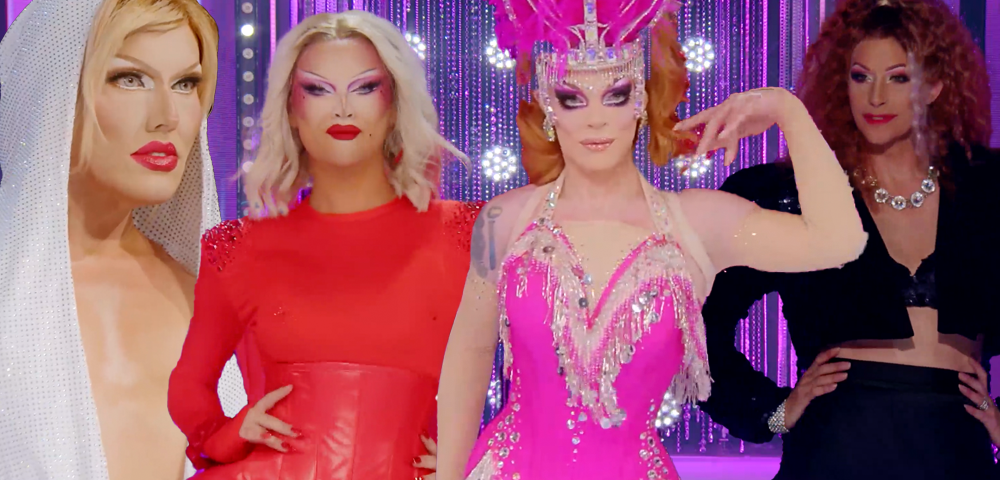
Image: Image: Composite - Facebook/Instagram
The Beat Megaclub in Brisbane is facing accusations they forced local drag performers to accept a pay cut, without warning.
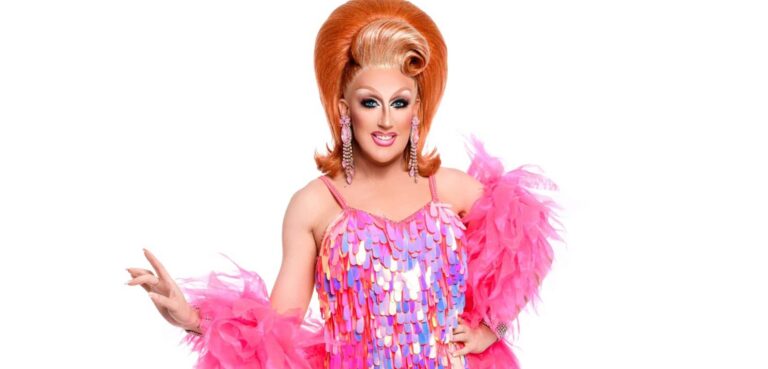
Brisbane drag performer Gayleen Tuckwood took to social media this week to air her concerns about her alleged treatment at the club.
Since then other performers have announced they are stepping away from the venue and others are speaking out.
Performers speak out about The Beat Megaclub contracts
Last week Gayleen Tuckwood took to social media to air her concerns about a recent contract sent to her by The Beat Megaclub where she has been a resident performer.
In documents sighted by this masthead Gayleen was provided a revised contract via email regarding her performance fees at the venue advising her that she was required to accept a new reduced rate to continue performing at the venue.
Issued on June 29, without advance notice Gayleen claims, the document advised her that her current rate of payment would be revised to $26.79 less than the current rate of $250.
With a gig booked that night Gayleen attempted to contact The Beat Megaclub several times to advise that she did not agree to the new rate, requesting confirmation that she would still be working at the venue if she did not agree.
At 3:14pm that afternoon she received a response advising that if she did not want to sign the agreement then she would no longer be working at The venue.
It was the last response she heard from the venue with Gayleen telling The Star Observer that they had not updated her or changed their mind. “Absolutely not. I don’t expect them to either. The truth is they will always find another queen that will do the work no matter the pay or work conditions” she said.
“Especially in this time people have bills to pay and regular weekly hosting gigs as a Drag Queen are not easy to come by. It’s a tricky situation where I don’t begrudge the people for taking the gig because they need the money, but also why would the venue change its ways if they can treat people badly and just replace them so easy?”
Not long after the incident Gayleen went public with the information, sharing the correspondence on social media. “I would love to be a fly on the wall and hear what is getting said behind closed doors about me and my posts. I would honestly be surprised to get any communication from them” she says.
“Their communication is awful, you can see from the screenshots I posted that we just got a “pay revision” lowering out pay without any reasoning or explanation then no reply to my follow up email. It took a full day for someone to answer the “am I working tonight or not question.”
Since going public Gayleen has received an outpouring of support from the community and whilst proud of her actions, has struggled with the reality of what standing up for herself means financially.
“It’s been a roller coaster of emotions” she said.
“At first I was so happy and proud of myself for accepting what my limits are and sticking to them. I was happy to loose a gig to be proud of myself.”
“[Since I] posted it publicly and was overwhelmed with the positive support from our community. Then when laying with my thoughts that night before bed I couldn’t stop the repeating sentences in my head. “Where are you going to find that $250 a week from” “proudness doesn’t pay the bills” I’m privileged enough that I can manage to still survive of my weekly income I just have to hustle a little more and spend a little less.”
“But the most annoying thing in this situation is how angry I am with the whole situation, anger is an emotion I find useless and doesn’t help anything or anyone but it’s uncontrollable. I was disrespected, asked to take a pay decrease with no explanation and then replied to in a way no-one should talk to their employees. I’m angry and that sucks.”
“I have never been asked ever to take a pay decrease. It’s wild to me. Pays go up as the cost of living goes up. They don’t get cut.”
It seems Gayleen is not the only queen to not accept the new conditions, however not everyone has gone public with their actions. “Absolutely there is a few others that have left because of it but not spoken so publicly about it” she says. “It’s their choice if they want to speak about it or just wash their hands of the filth and move on with life. I’m not going to name anyone that’s their story to tell.”
One of those queens who did speak publicly was fellow resident of The Beat Megaclub Abril Latrene. Taking to social media she posted a simple statement in the days following.
“Tea will not be spilled as I really don’t care for the drama” she wrote on social media.
“As an update, I for the moment, are stepping away from The Beat.”
“I’m super proud of everything that I have been able to contribute over the last couple of years and of the queens that are in the space as residents” she wrote. “It just gets to a point where there is only so much you can ignore or make excuses for, and the situation with Gayleen tore my heart out for the last time. I’m hopeful a resolution comes forward and know that in moments like these, when people make a stand, venues improve things. So I’m grateful to be part of any future positive change that gets put in place.”
Sellma Soul speaks out: “We deserve fair pay”
Another drag icon of the Brisbane scene has spoken up following the news with Sellma Soul taking to social media to air her concerns about the pay cuts but also to address wider issues regarding performer pay conditions.
Sellma, a former employee of The Beat Megaclub aired her concerns about performer rates of pay and other conditions in the industry.
“Before the current residents that are working endlessly to maintain their positions we also had another group and a group before that, and at some point one or two of those performers spoke up about pay and then the others wouldn’t and thus began the gig economy” she wrote.
“But now the game has begun yet again!? People are upset but have no idea what power we hold as a community and that we could turn around tomorrow and change our industry for the better.”
“We deserve fair pay. We deserve spaces that are free from nepotism. We deserve a community without gatekeepers. We deserve radical change towards a very stale and white industry.”
View this post on Instagram
Speaking to The Star Observer Sellma recounted her experiences working at The Beat Megaclub for a year, which she says ended after requesting a pay rise.
“We (drag performers) had asked for a pay raise which was declined and the bar tab was taken away. Which didn’t affect me but did affect some of the other performers” she recalls.
“This was when we’re doing 3-4 spot numbers a night across the multiple bars. Some nights 6-2am, 4 spot numbers $200 that’s not enough, and I don’t think you’re going to go get another job while your working 5 nights a week at the beat and that’s not a livable wage.”
“[The idea] that its only raised by $50 In the last ten years is crazy.”
While the issue of performers being forced to take a pay cut in this particular instance is of concern, Sellma says similar issues have taken place “across the board in some capacity” in Brisbane, but emphasises there are definitely venues paying “semi fairly.”
“But that’s still not fair pay, working weekends and nights but it’s always sold to you as a privilege” she says.
With an ever growing scene the ability to get on stage and get paid for it continues to be an issue that plagues the industry in general she says.
“The same people get booked every week which means there’s little to no opportunities for new creatives to make space and get paid for it. Which in turn has created the exhortative culture of baby performer comps [where] no one gets paid except the producers. And no one gets anywhere unless they are friends with those producers. That’s nepotism that’s not community.”
Sellma believes that issues like those experienced by Gayleen exist due a lack of unity for drag performers, with no union and often no experience working as small business contractors many performers struggle to advocate for themselves.
“I think there is pressure for people to accept these conditions because they don’t know there are any other options or ways of doing this. A lot of people have asked me questions around. What would I recommend doing? What would I say in order to get businesses across the line but the reality is is that I have been in those rooms multiple times and had conversations with the same people that these kids are talking to and nothing has changed.”
“So what do we do? Unionise? We are sole traders we set our own bench marks which is good in some ways but also the same reason our industry falls pray to undercuts. The rhetoric of people having no other options is somewhat tiresome and it also hurts to hear as somebody who has had to find alternative work because they no longer are accepted or liked by many of the industry professionals and leaders in our so called community.
“Nothing changes because nothing protects us”
Sellma explains the issue also goes beyond just money, affecting friendships in the community as performers struggle with mixing business and friendship at times.
“In my humble opinion it is almost impossible to walk the line of friendship and business in Drag especially since the commercialisation of it, thanks to Drag race.”
“I think things have become more about who you know than what you know and what you have lived through and how you share those stories. I’ve been calling it the best friends race mentality because nobody wants to have any conflict and nobody wants to hold anybody accountable because we have already made examples of those who do and they just don’t get booked.”
“Because to actually start pointing some fingers at people that have far more than a lot of us in the community would mean that they would have to share or miss out and that has been my consistent message since I’ve started working in this industry which often means you’re not good to work with or you’re trouble.”
It’s been a difficult road between advocating for herself, working with the community and finding a pathway outside of the queer venues, but something that more and more drag performers are doing as corporate gigs and mainstream venues embrace drag as corporate entertainment. But it was a journey that Sellma says turned her into a “‘drag monster.”
“Far before I started working at The Beat. I made my name by working with non-queer venues in the corporate sector. I am very good at representing myself and asking for what I believe is fair pay. And I got so good at that because I was disregarded by many of the Drag queens that were working at the time so I found my own access point.”
“It wasn’t until I did one of those heinous competitions that lasted for 12 weeks that I realised our industry was sick. And in all honesty I was a Drag monster. I knew that I had a ladder to climb and I knew that the only way to do that at the current moment was to enter a competition. Get my name out there and get ahead. But the longevity of that doesn’t exist. We have a lot of issues in our industry.”
The Star Observer have reached out to The Beat Megaclub however they have declined to comment.

Support the Star Observer… while you still can
LGBTQIA+ media is under threat. Queer content is censored by tech conglomerates who amplify bigotry and push out AI slop — so we receive less financial support than ever.
When our community is muzzled and intolerance intensifies, we need queer media more than ever. Your donation means we can continue paying queer journalists to write queer news.
Don’t rely on the straight lies of big tech – support Star Observer instead and donate now.