
The Social Media Ban Is Here — This Is How It Will Impact Queer Youth
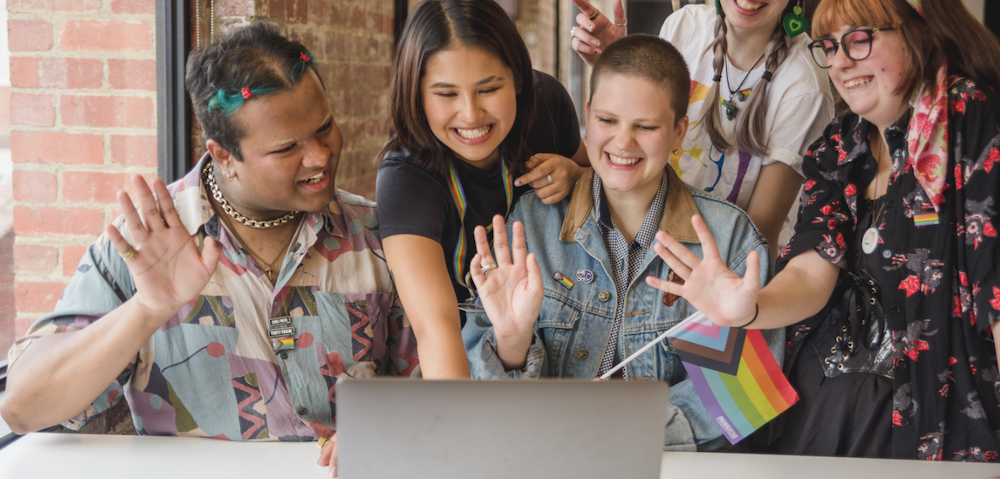
Image: Minus18
Although the law doesn’t come into play until December 10, today marks the unofficial start of the under 16’s social media ban, with Meta beginning to remove the Facebook, Instagram, and Threads accounts of some of the 20 million young people in the country.
While much of the media and government focus has been centred around the harms of social media, the ban will disproportionately impact young queer people, who have found community and connected through the internet for decades.
CEO of Minus18, Micah Scott told Star Observer that, for a lot of young LGBTQ+ people, the internet is a place of safety and support, especially for those in regional and rural areas, and those who aren’t able to be out to the families.
In their 2025 national survey of more than 2700 LGBTQ+ young people, Minus18 found that 70 per cent of teenagers said they’re not safe to be out to their entire family, and 89 per cent had experienced bullying, harassment and violence in their lifetime.
A whopping 99 per cent of respondents also said making queer friends is an important part of their lives, with a subsequent survey centred around the social media ban finding that 95.7 per cent of 1,000 LGBTQIA+ youth relied on social media to access friends and emotional support.
“82 per cent of those young people said the social media ban would directly leave them feeling more disconnected and from our community and networks at Mins18,” Scott said, but added that this number only applies to those already accessing queer youth services, meaning thousands of young people who haven’t realised they’re queer will be left in the dark.
“We aren’t able to include the young people who haven’t gained access to services yet, who are going to have a much harder time connecting with community, escaping the everyday life and unsafe experiences of their world in those online spaces.”
The queer online experience isn’t only limited to community- it’s also a vital place for people to access age-appropriate resources and information about gender and sexuality.
Organisations like Minus18 have spent years investing in these online spaces and digital programs to meet young people where they’re at, and are now facing a future without these structured spaces to share positive, supportive content to.
Where to from here?
As queer youth are barred from accessing their usual online spaces, they’re pushed to smaller social media sites that are exempt from the ban in order to find community and information- but this comes with its own risks.
“The government has the belief that they can legislate faster than young people change their online behaviour,” Scott said. “But it’s also possible to get around digital restrictions just through the nature of the internet. And young people are pretty savvy in this way, if not the most savvy.
“Young people are being driven to access these spaces in secret, so without parents knowing, under the guise and understanding that they are accessing spaces they’re not supposed to be, these spaces are less moderated.
As they know they’re not allowed to be in these spaces, there’s less chance of young people reaching out for help if they experience harmful content or behaviour, out of fear that they’ll get in trouble, placing them in a precarious situation.
“We need to be doing everything we can to create safety when they’re harmed and remove the already high rates of shame that we know stop them from accessing support already, and the social media ban risks adding even more shame and stigma on top of already very highly stigmatised experiences,” said Scott.
A lack of structured information from the government also means that organisations like Minus18 are struggling to adequately prepare young people and their families for life after ban, making the transition even more difficult.
“What we’re creating strategies for has been unclear: the parameters, the platforms, what’s included in the ban, what’s not included in the ban, is constantly changing and evolving and sometimes contradictory,” Scott said.
Currently, the ban only applies to ten social media sites, with Minus18 encouraging people to join their moderated Discord server to keep up to date with their work and services, as well as engage in community. It won’t solve everything, but it could be a lifeline for hundreds of queer youth.
“These spaces are more important than ever before, Scott said. “And it’s a space that Minus18 are committed to navigating and supporting young people through.
“The need is for the conversation to shift away from where young people are not allowed, towards how the Federal Government is going to mitigate the harm and disconnection and severance from health organisations between between them and young people as a result of the ban.”

Support the Star Observer… while you still can
LGBTQIA+ media is under threat. Queer content is censored by tech conglomerates who amplify bigotry and push out AI slop — so we receive less financial support than ever.
When our community is muzzled and intolerance intensifies, we need queer media more than ever. Your donation means we can continue paying queer journalists to write queer news.
Don’t rely on the straight lies of big tech – support Star Observer instead and donate now.